

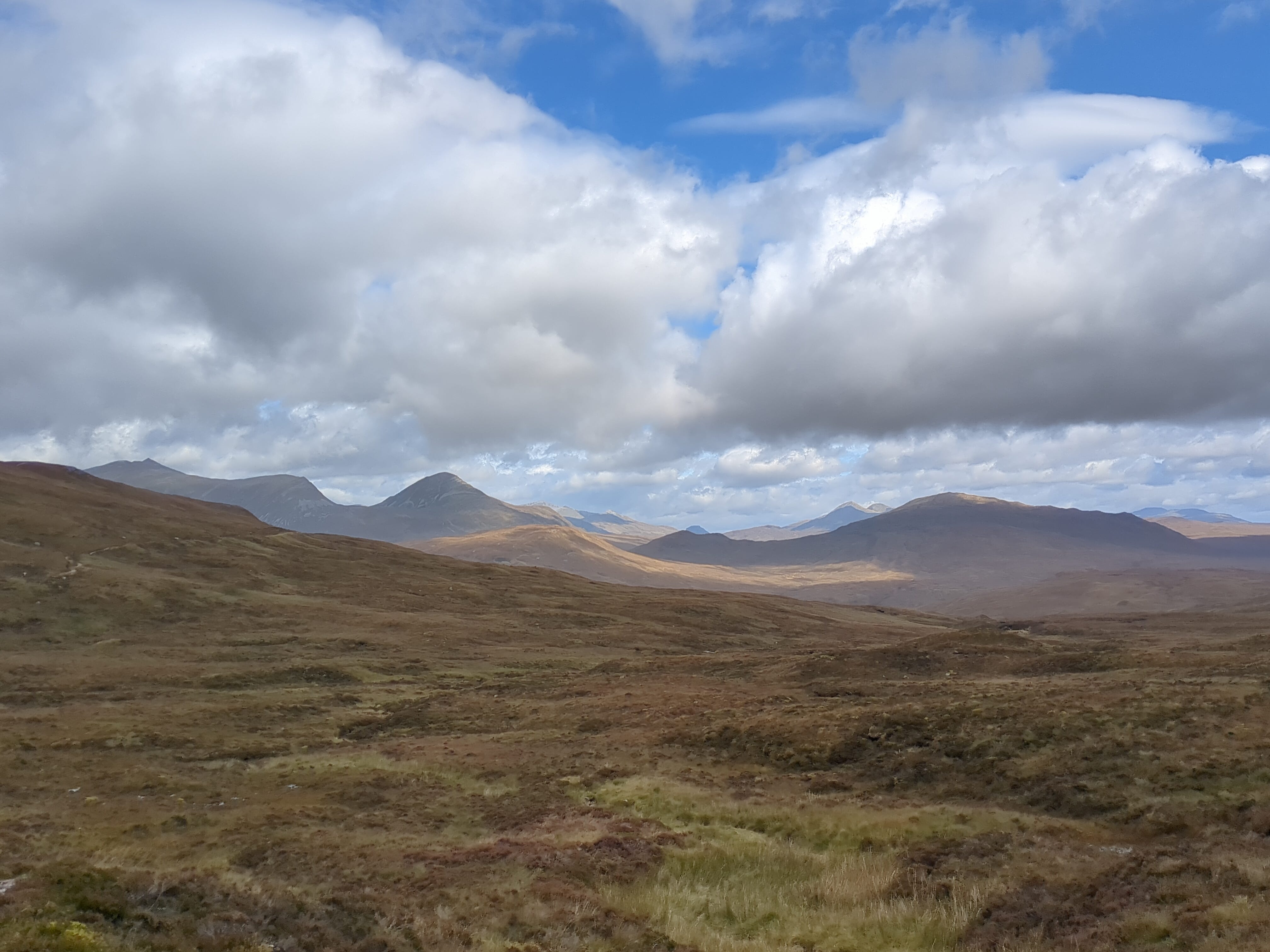
“Have we . . . grown afraid to escape, become dominated by the idea of a social duty that must keep our noses to the human grindstone, the grindstone that an ever-increasing mass hysteria keeps whirling with an ever-increasing madness of momentum? Work, records of unemployment, misery, conflicting politics, wars, and the lowering nightmare of a universal war, until sensitive beings can hardly listen to the wireless news, so grisly its tales of disasters and mass human destruction. Are we in social honour bound to increase this ghastly momentum by adding the thrust of our own forebodings and fears? or has a time come when it may be the better part of courage to withdraw sufficiently far from it to observe with some sense of proportion what exactly is taking place? Not to mention the purely personal point of view that one has only one life to live and that, before shuffling off, a little peace may be necessary in which to exercise one’s mental attributes and try to get some glimmering of what all the madness is about, or even of what is due to oneself, despite all the man-made duties in the world?”
Neil Gunn, Off In A Boat
It was a Tuesday when I began to walk. Point A was on the high street, as they call the main drag across the pond. It was a stone’s throw from the railway station. A German couple offer to take my picture to commemorate the start. I could fill my water bottle from a public tap. My trailheads at home are gravel affairs, offering entrance through laurel portals, emblazoned with a strip of paint on a tree trunk. This was quite different.
I set out through the parking lot. Yes, a parking lot: different again. The first two miles were a stroll befitting a city greenway. The top of a hill offered a vista over cloudy Strathclyde, and then reminded me: the camera. I checked my pack. Don’t tell me. I hefted my pack and hoofed it back to town. I must have left it on the bench by the tap. Reaching the plinth I had started from, there was no camera. What a start. “Excuse me, are you looking for something?” said a lilting voice behind me. A dark-haired woman leaned out of the stationary store. “A camera!” I replied. She held it up. She’d seen it abandoned, picked it up, scrolled through the pictures, and memorized my face in case I came back. Yes, this certainly was different from home.
I needed different. I’d been ill for months. Tests on tests, but the docs couldn’t say why. A virus, their best guess. Perhaps stress, too, they said — have things been bad at work? Dadgum, son, let me tell you — both ends have been lit ‘til there’s no wax between the wicks.
Because of, or parallel to such exhaustion, the writing had just stopped. The writer’s work gets shoehorned into the dusks that shoulder the salaryman’s working day, but That, the Drying Up, had never happened before. Concerning, to say the least.
And for that, dear reader, I apologize. I had a novel I had planned to release chapter by chapter in the full flood of summer. I had even activated paid subscriptions for it. As it turns out, the best authorial plans can be laid low by mere flesh and the concatenations of life.
Life, always delivering that one-more-thing: in this case, the big birthday, the halfway mark. As much life lay ahead as behind me. I could not let that stop me. I could not get stuck at that wall. If I wanted over, I would have to go around, however long that took. I owed that to myself, a way forward without reference to our whirling world of anxiety and terror, which, in human terms, is not substantially different that described in the opening quote. And if I owed it, there was debt already, some sort of credit already rendered. Something I had desired or loved once, but never acted upon. It could have been many things. But of all of them I picked the one that meant going far just to get back: ninety-six miles through the Scottish Highlands, the West Highland Way.
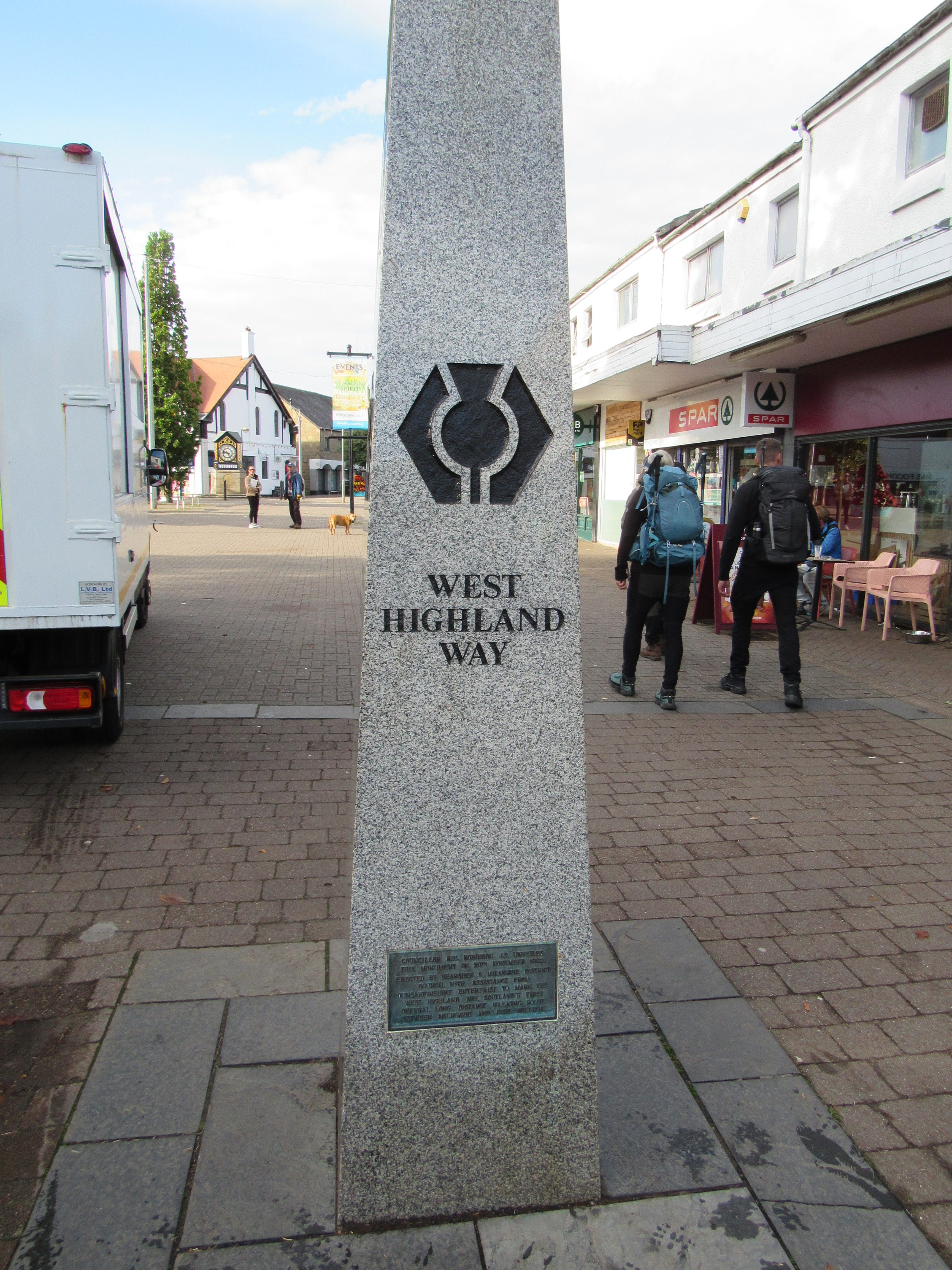
Walking lays things bare, be it things unknown or forgotten. That lost camera on the very first day — to think I had equivocated for a moment on the top of that hill, considering writing it off! Emotion said, it’s probably stolen, people are terrible. Reason said, you only had a dozen photos snapped anyway, just write it off under your trip insurance. But something, perhaps the trail already at work, or perhaps it was the need of the trail going ahead, like faith before understanding, that said, No, silence them both, and listen. Intuition will speak. It does so calmly, concisely, and correctly, but it does not demand. Intuition is a kind of love, in its own way, because, like Paul says, it does not insist on its own way. And intuition said, go back. Everything will be fine. And it was. I was reacting to the world, not acting with clear intention in spite of it. Was that the root of my maladies, my scars, the burns of white-knuckling this “ever-increasing madness of momentum” we find ourselves aboard? Perhaps one root, though certainly not the taproot. There would be more to be seen.
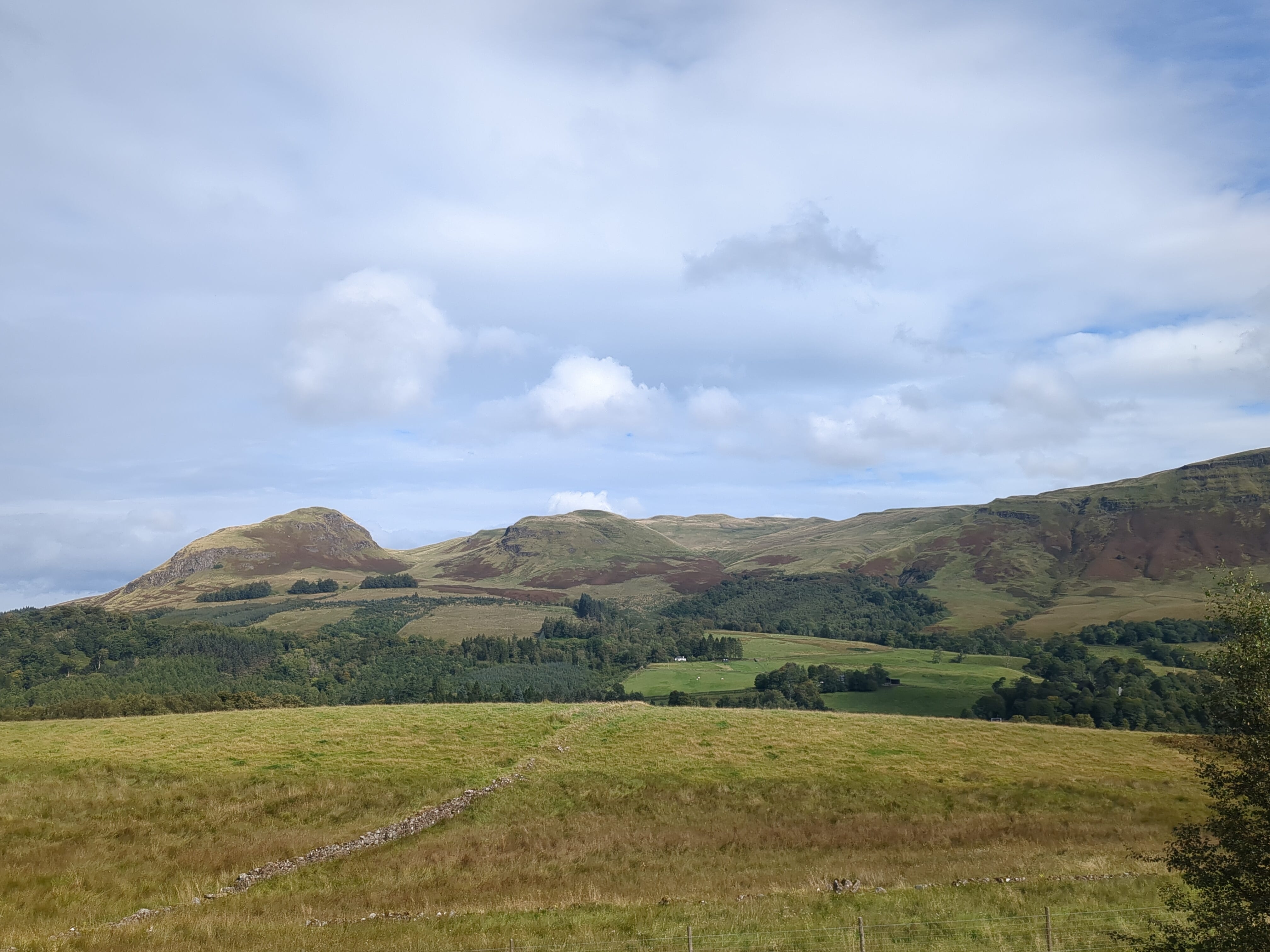
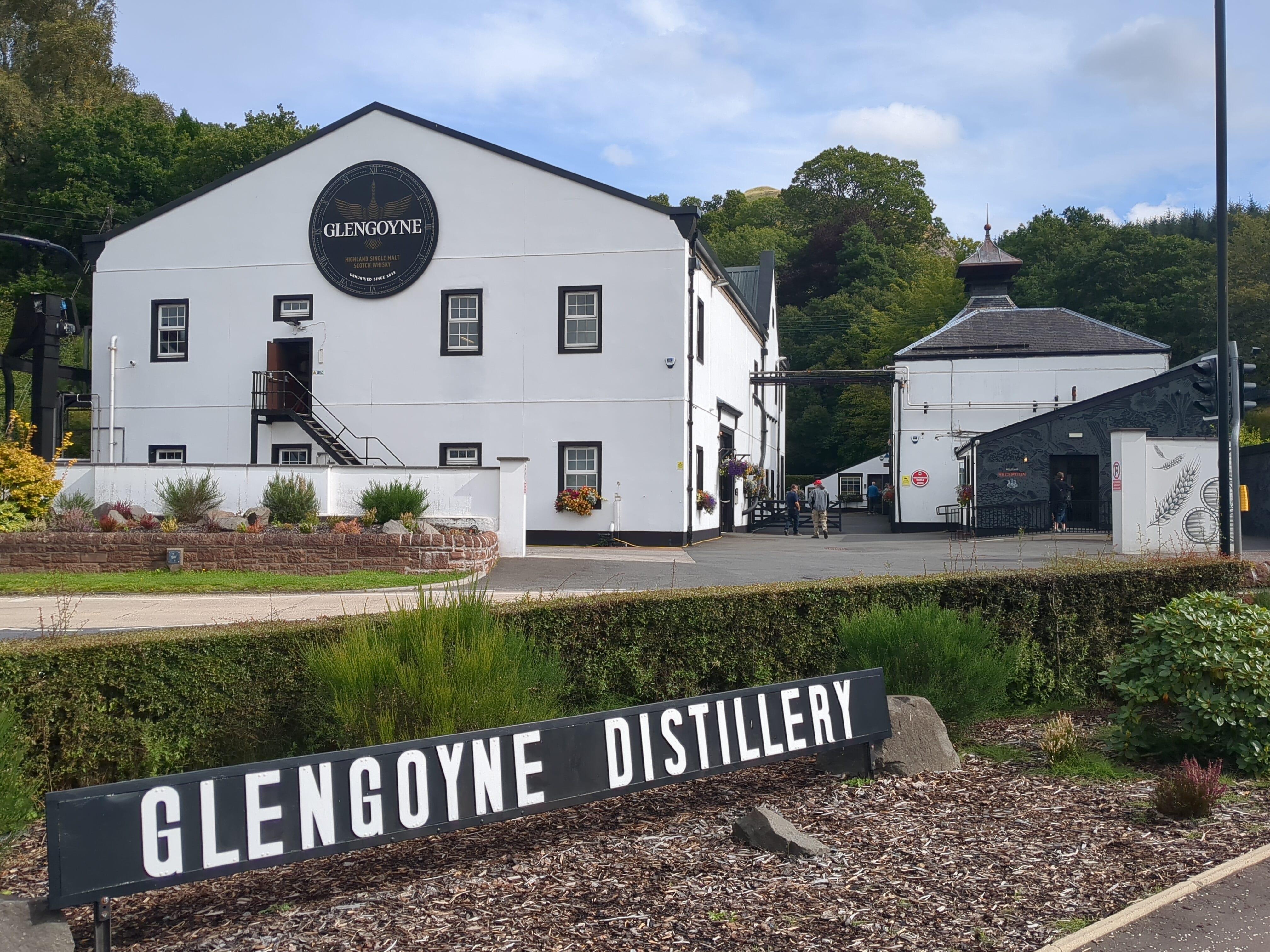
I walked on with my camera, then, grinning like an idiot. I certainly felt an idiot, in the ancient Greek sense of a private person, outside the realm of public life. An ocean away from my own polis, it was just me and whatever I was carrying with me, literally and metaphorically. Already an inkling that the interior was overburdened, the ups and downs over the gentle glens also told me I literally had too much on my back. Too much food, water, and canister gas. I was getting smoked by gaggles of boomers with day packs (a recurring theme). Is this what I had come all this way for? I shucked my pack to suck wind and read a signboard: the many huts in this area were built in the ‘30s when outdoor enthusiasts had begun training to fight in Spain. I was doing nothing even close; I was just trying to finish a walk. So, then: pack on, walk on. Crest ridges, pound up and over high fields of sheep, and across and along tannin-browned burns bubbling with foamy eddies. What’s that? A distillery? Who could resist? Perhaps I should have. The break cost me my momentum. I returned to the trail leaden, aching in the left knee. Ah, but that’s normal, I said. All a part of the first day.
In my sleeping bag that night, my legs curled up on their own, my sinews shortening under cover of sleep. At awakening’s first stretch, I gasped for the stiffness of my knees. Illness had snatched away my fitness, I knew, but to feel thirty years older than I was? A poor omen for the overcast miles ahead.
That second morning I put three miles under foot with decreasing ease. The LCL, on the outside of my left knee, screamed worse with each step. No stretching seemed to extend my range of motion. At a trail junction, I shucked my pack and sucked down water. Conic Hill was visible ahead, a molehill by my past standards, but now? By what standard now? Where do you stand? My intuition knew Robert’s Rules, it had never ceded the floor since the day before, and for this I was grateful, for it told me what to do. Reluctantly, I turned away, ego checked.
You are no spring chicken anymore.
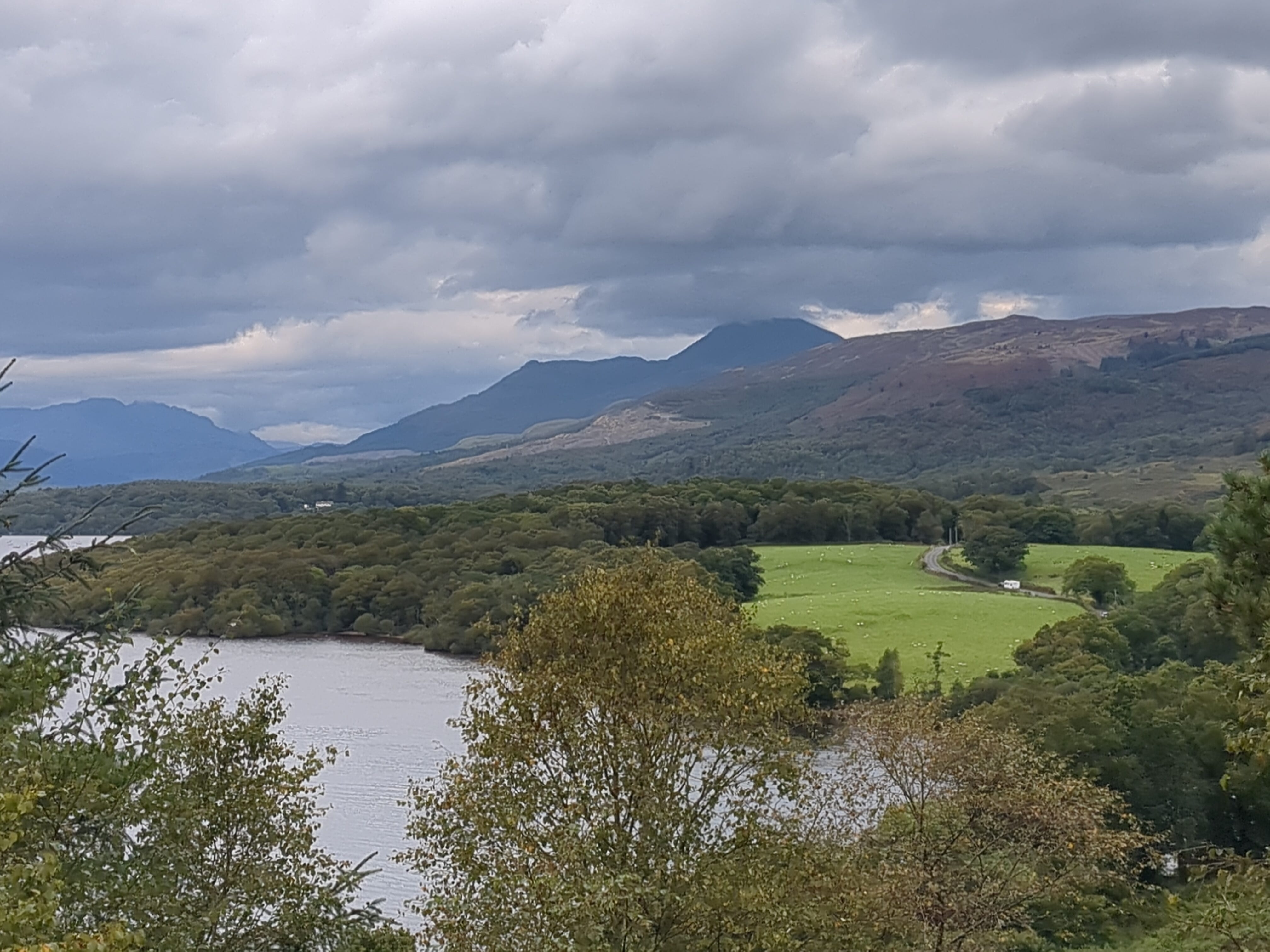
I half-limped along the bypass Balmaha and then up the shore of Loch Lomond. The stiffness and pain would not abate. At a caravan park store just about to close, I bought ibuprofen in near desperation. Two tabs kicked in quickly and carried me the rest of the way to the campsite. I pitched in a fresh downpour, somehow setting up without drenching everything. The pitter patter on the fly abated and I emerged from the nylon cocoon to cook noodles. Mere yards below, the waves of Loch Lomond crashed on pebbles. Spooning sardines out of a can, I looked up: a wall of white passed the westerly ridge line and blotted out the far shore. Time to get in the tent.
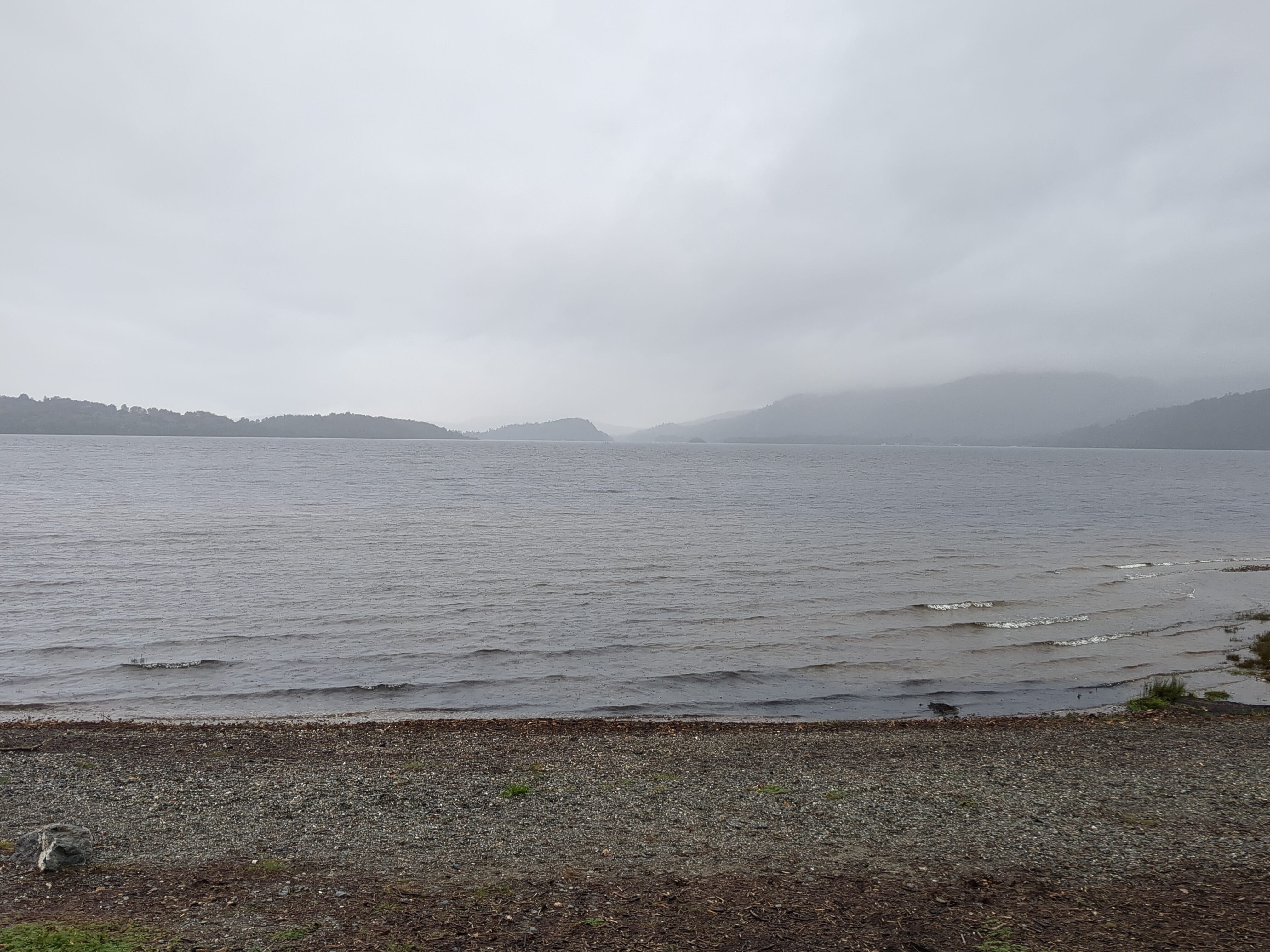
For twelve hours the rain shot against the fly, which dipped inward as the sustained wind bent the carbon fiber poles back on themselves. I lay there, listening, waiting for catastrophe. Why do we do this to ourselves? I had no answer, not in any intellectual capacity. But it’s light now. Get up, pack up, and get going.
Three miles to Ben Lomond and I threw in the towel. Perhaps this was it. My adventuring days were over. No more horseback on a rickety saddle across the Gobi. No more rat soup with the tribal chief in the highest reaches of Zomia. Caution as the rule rather than “let’s try.” At a bunkhouse below Ben Lomond, I stopped for the day, far too early. Showered off my stink. A gray-haired Glaswegian named Brendan was crashing in his sleeping bag in the common room. This marked his twentieth time on the trail. He’d hiked at all times of year, seen the best and the worst of the Way, knew all the contingencies. Through his Clydeside patter, he conveyed the best options for the coming days, and I took quick notes. A trio of youths arrived, cousins from three different corners of Germany. They cooked an elaborate bolognese with vegetables they’d been lugging for three days. Ah, so I was not the only one.
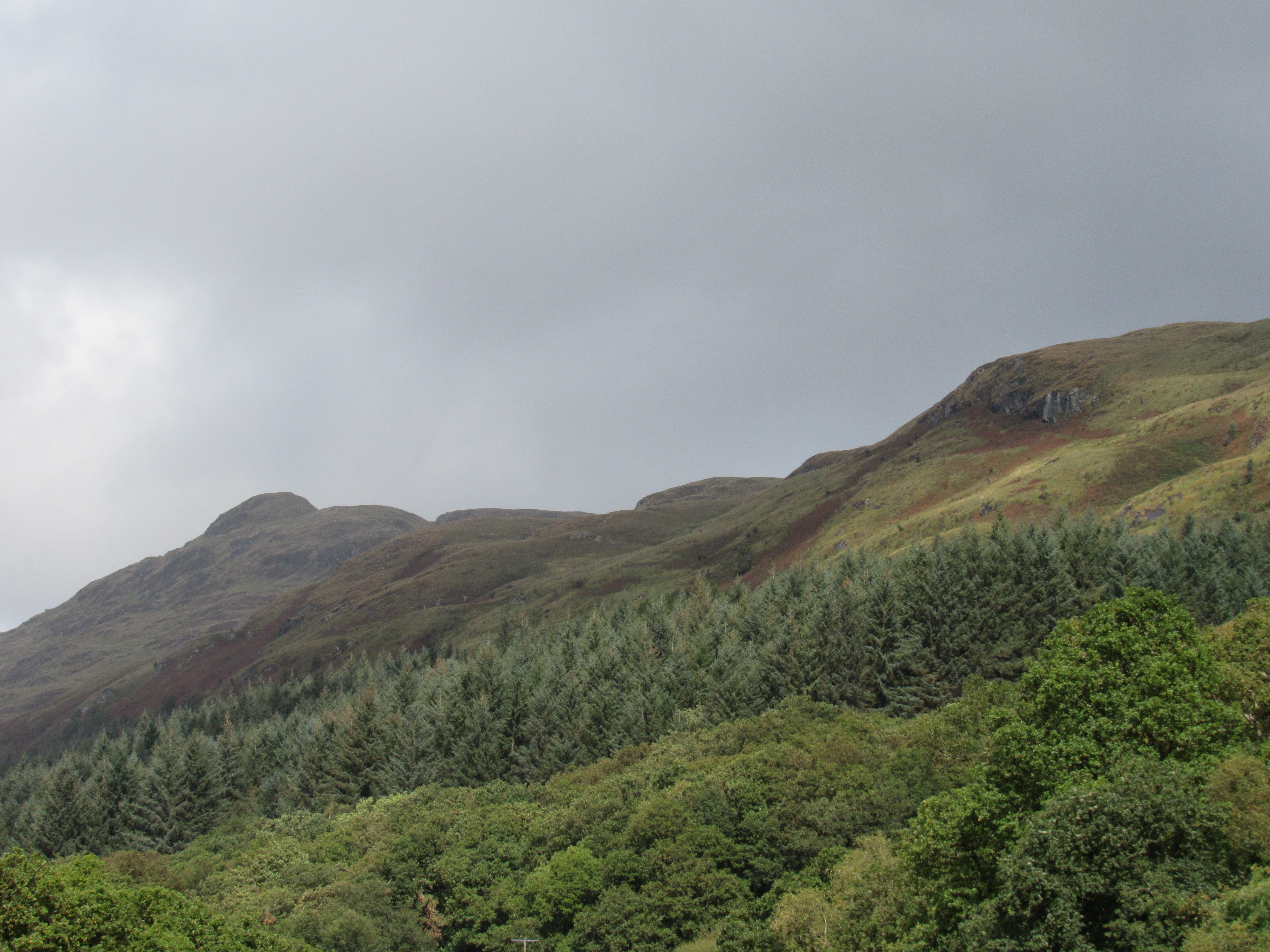
Recalling Brendan’s advice, the next morning I took the high road, fitting for Loch Lomond. I stopped but once, and that to watch a white burn seething down a mossy slope under dark pine canopy. Therein lies a lesson, I thought. Water, as almost a physical law, takes the path of least resistance. Were it not for the water itself, the most direct way to go anywhere is water’s course, a river or stream. Shouldn’t it be so with life? I have always been one to try the hardest possible thing, but why do I not try to make progress by seeking the path of least resistance?
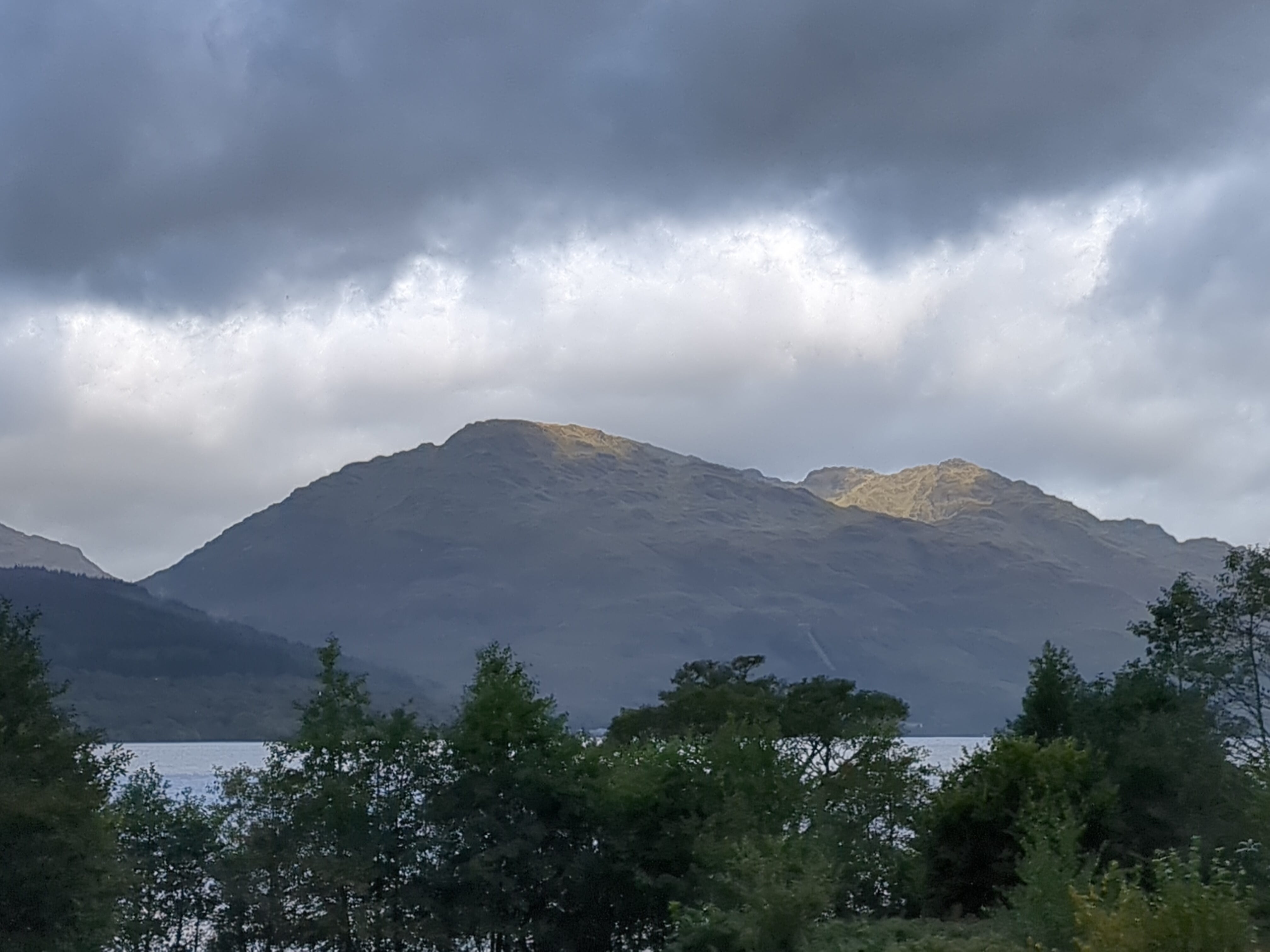
Seven miles that day in steady rain before the knee gave way. I was already headed for the boat at Inversnaid when I ran into Brendan. I told him my intention, the exact contingency he had outlined. “Oh, aye, yir no gonnae want tae up that way wi’ a bad knee, it’s rock scrambling th’ whole way and the rain’ll do ye no favors.” Bidding farewell for a second time, I caught the boat across the loch. A tourist on board insisted on snapping a photo of me with the walking stick Brendan had snagged for me out of the trees. On the western side, I caught the bus north. Once upon a time, it would have felt like cheating. For now it just felt like what had to be done.
The bus dropped me close to my next campsite. I cooled my heels with a pint and took in the setting sun. The West Highland Way is peculiar to Americans in that it is very civilized. This is both off-putting and charming. Every day, you will pass through a village, or least close by a pub, and one of your meals can be cooked by someone else, accompanied by a pint or three. While right-to-roam laws in Scotland mean in theory one can pitch a tent virtually anywhere north of the central belt, in practice the sheer soddenness of the terrain and the prevalence of livestock means one has to be judicious with choosing a wild campsite. At numerous places along the trail, one can pay a few pounds to pitch one’s tent close to the trail and amenities. As an American, I naturally feel the woods are for being a weekend savage, but when in Rome . . .
The German youths from the bunkhouse arrived. Indeed, most of the walkers I encountered were from the Continent: German, Spanish, Swiss, Belgian, Dutch. Their universally curious aspect, almost without variation, was their lack of curiosity. They simply did not seem to be interested in anything around them. The whole journey for most of them seemed to be a transfer of daily civilized routines outdoors. Get up, pack, cook oatmeal, check your messages, get on the trail, make good time, arrive, set up, scroll Instagram while you do a load of laundry, cook, eat, sleep. Constant fretting about being able to charge phones. From my conversations with these young Continentals, I gleaned they hiked many different trails similar to this around Europe, and I could see their habits were the same there, too. What was the allure of such a tame hedonism? I could understand doing something like this once, but again and again? Was that the point of life in Europe? Perhaps this American would simply never understand.
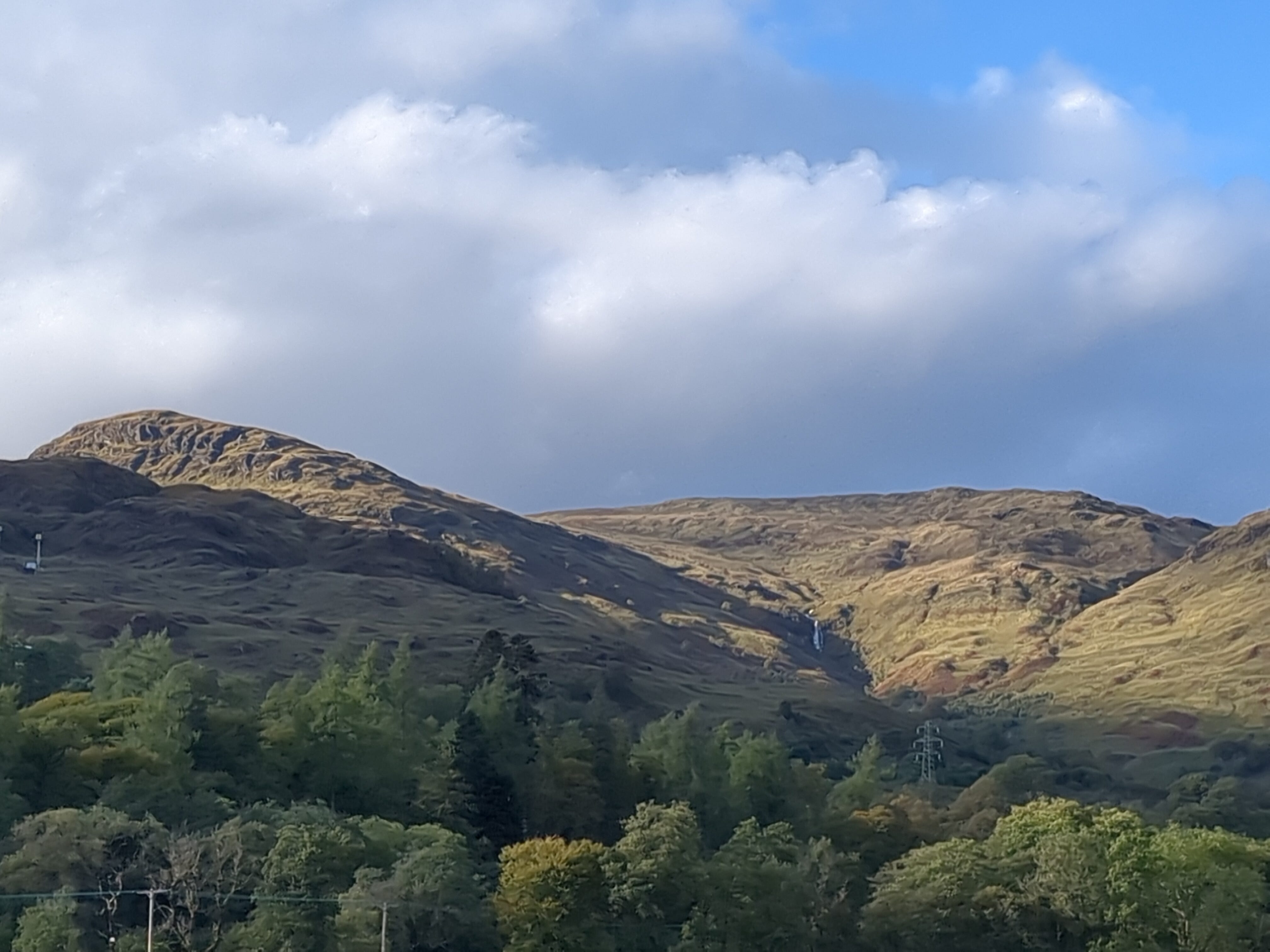
The next day the weather did not improve, but the knee relented in its wailing and landscape became more dramatic. Loch Lomond was little different from at home; when my brother asked how the Way was, I had texted him a picture, and he replied, “I know that trail.” But now began classic Highland scenery. Glacial glens are the same the world round, and while the woods were mossy and ferny like the highest reaches of my Appalachians, these open valleys and ridges reminded me of a wet Wyoming. Just substitute the sagebrush with heather.
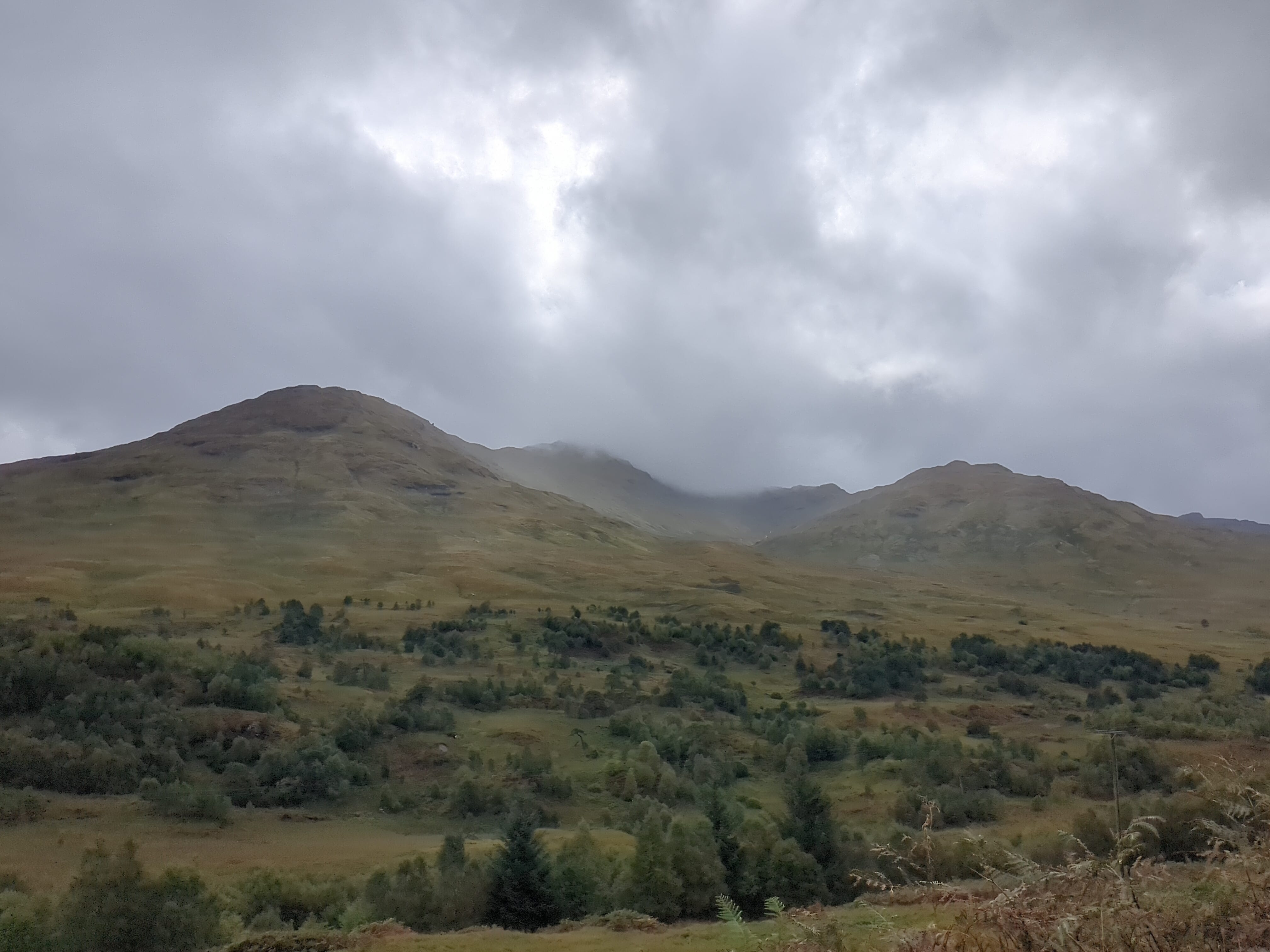
The clouds broke and wisped away, granting brief but beautiful sightlines before the rain surged back in. The River Fallon ran tea-dark, reminding me of the Neuse at New Bern. Dry stack stone walls, standing five feet high, were white with lichen or hanging gardens of moss. The rain blew up and under every crevice of my jacket and poured off the pack cover and ran down my back in rivulets. I was wet and well-chilled by the time I reached the clear-cuts above Crianlarich. The vistas here improved, the slopes full of farms cut by long strings of white where the burns surged from crest to bottom. Descending and crossing the A82, the rain grew only colder. The Strathfillan ran dark and demanded permits to swing bushy and sparkly flies down its riffles. On the far side, in the ruins of a farm lay the ruins of Saint Fillan’s priory. Crossing the river again, the battlefield of Dalrigh, where a many-greats grandfather fought a rearguard and made his escape. All the way along the river, I looked for spots to wild camp, but found nothing. I ventured out into the woods, wandering here and there, but anything clear of moss and even remotely level was standing water. The only reasonable place was on the sandy shore of the Strathfillan, but with heavy rains in the forecast, I was keen to not be swept away. On I walked. Above the pool where many-greats-granddaddy hid his sword, I ran across a schoolteacher from Yorkshire. We walked and talked, parting at Tyndrum, where I kept on through town and past the railroad viaduct. Every campsite there was sodden or littered with sheep droppings, so I backtracked to a lone clear spot next to the cemetery. The weather cleared over the meeting of the three glens in time for sunset.
The night was bitterly cold, the sodden ground no help. Camp though I did on the far side of town, I still could not beat the earliest walkers: two Englishmen blathering on and on:
“Mate, oim tellin’ ya, we can do this whole ‘fing in ‘free days.”
“Maaaaaate, there’s no way—”
“Mate, oim naught jokin’ — ‘free days, tops. We know all the stops, eh? We just got ta’ traing fo’ it.”
“Maaaaaaaaaaaaaaaate—”
The walking was easy down the glen. Who should come from behind but Brendan. We walked together, his brisk pace (for he only carried a day pack) stirring mine to match. “Diyye know abowt th’ Auch Estate wir waulkin’ through here? Oh, but there wis a murder here no five year ago.” He regaled me with the story of how the two brothers who ran the estate hit a cyclist in the dark after leaving the hotel bar at Bridge of Orchy. Suddenly we ran up on the teacher from Yorkshire and all began talking like best friends. Brendan continued, explaining that the brothers had dumped the cyclist with the dead cows “just up there,” and had only been caught because one of them had admitted the fact to his new fiancee. Indeed, the man showed his fiancee the spot of burial and the woman left a Red Bull can crushed on the spot to mark it, used by the police to later locate the corpse and convict the brothers. Soon enough we reached Bridge of Orchy, where this by-Scottish-standards shocking tale began, and the teacher split away. Brendan and I took coffee at the hotel beside the A82, lorries and tour buses surging past, trailing clouds of mist. Across the road came two familiar faces: a tall, busty Dutch blonde and a German redhead of even larger proportions. We had said hello and nodded in acknowledgment several times over the prior three days. Now we actually talked, even though we never exchanged names. Coffee flowed; the clouds began to gather.
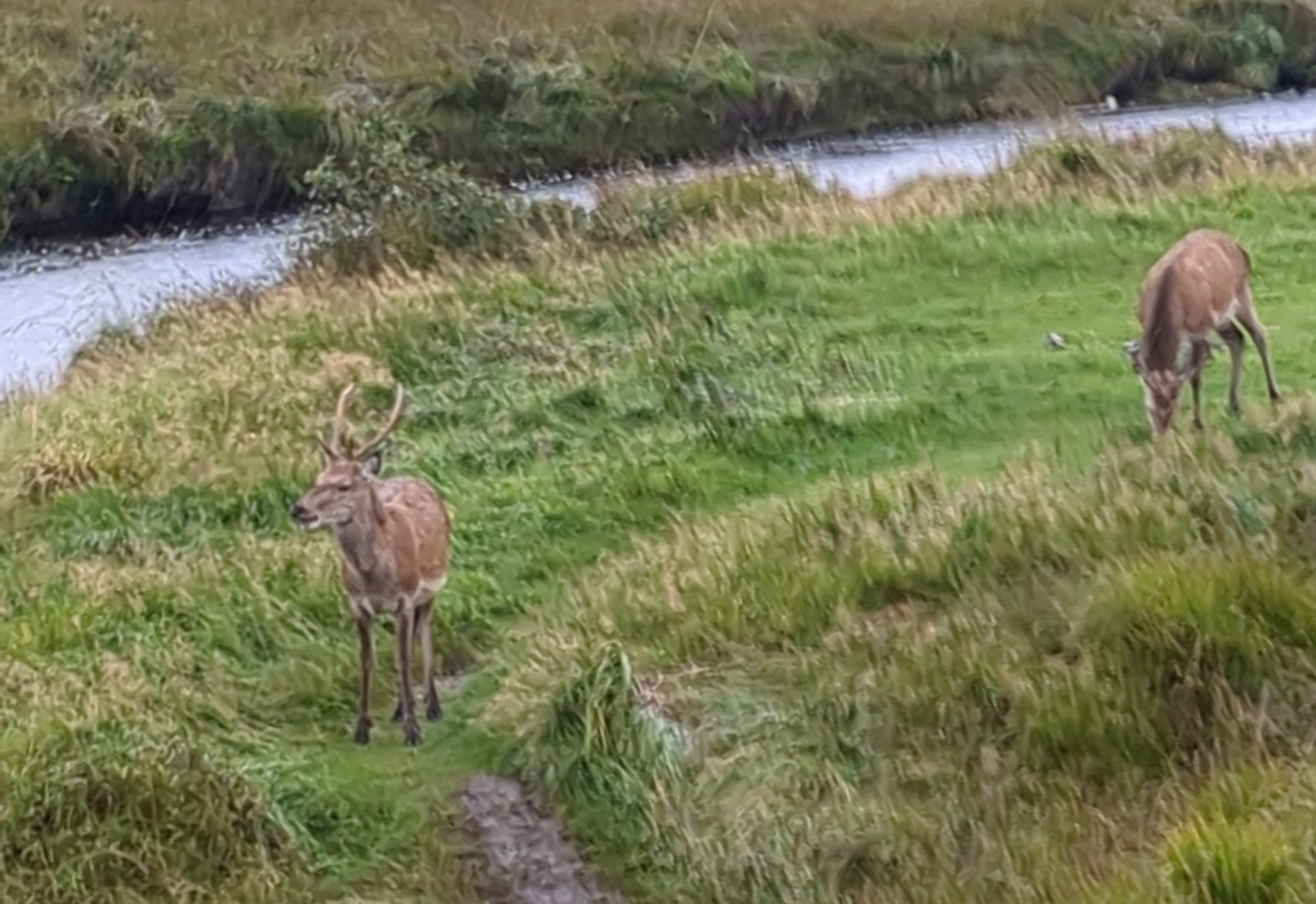
The women of the impromptu gathering were camping in town beside the bridge. Brendan was continuing on all the way to Kingshouse, light as his load was. I was not ready to stop, my knee feeling better and better. As the rain rolled down the glen, I set out again, curling along and over the ridge and descending down to Inveroran. There I camped next to another bridge, a favored spot by the number of other tents pitched there: Belgians, a Slovenian, and an English kid with the worst single-man tent I’ve ever seen. Again, there was the possibility of pints at the hotel there and every walker indulged. Upon sauntering back to the bridge-side pitch, we spooked twenty-five red hinds and their young. To our surprise, two red stag remained amongst the tents. These ungulates clearly had no predators on either four or two legs, because they wandered right in among us. As I prepped for an early bed, the rain rolled in.
Up before the rest, I shared instant coffee with the Slovenian and ate Rolos. I needed to shuck more weight, so I cooked a freeze-dried chicken tikka masala I’d forgone the night before. The meal choice didn’t seem absurd, it seemed natural, like everything about this walk. Wake up, eat, pack up, walk and walk walk walk, then pitch camp, eat, and sleep. Life was reduced to essential elements. At last. Is this what it took? A contrived if pleasant journey on the other side of the world just to remind myself of what was always true? Worse: was what was true not simply effectual, pushing its way into my daily living, but required seeking out?
Walking before the crowds, I passed an estate and its dense, dark conifer plantation on the right before it gave way to Rannoch Moor. The largest uninhabited area in Britain. Which isn’t much, something like fifty square miles, but the atmospherics are certainly there. Someone described it as the Dead Marches from Lord of the Rings.
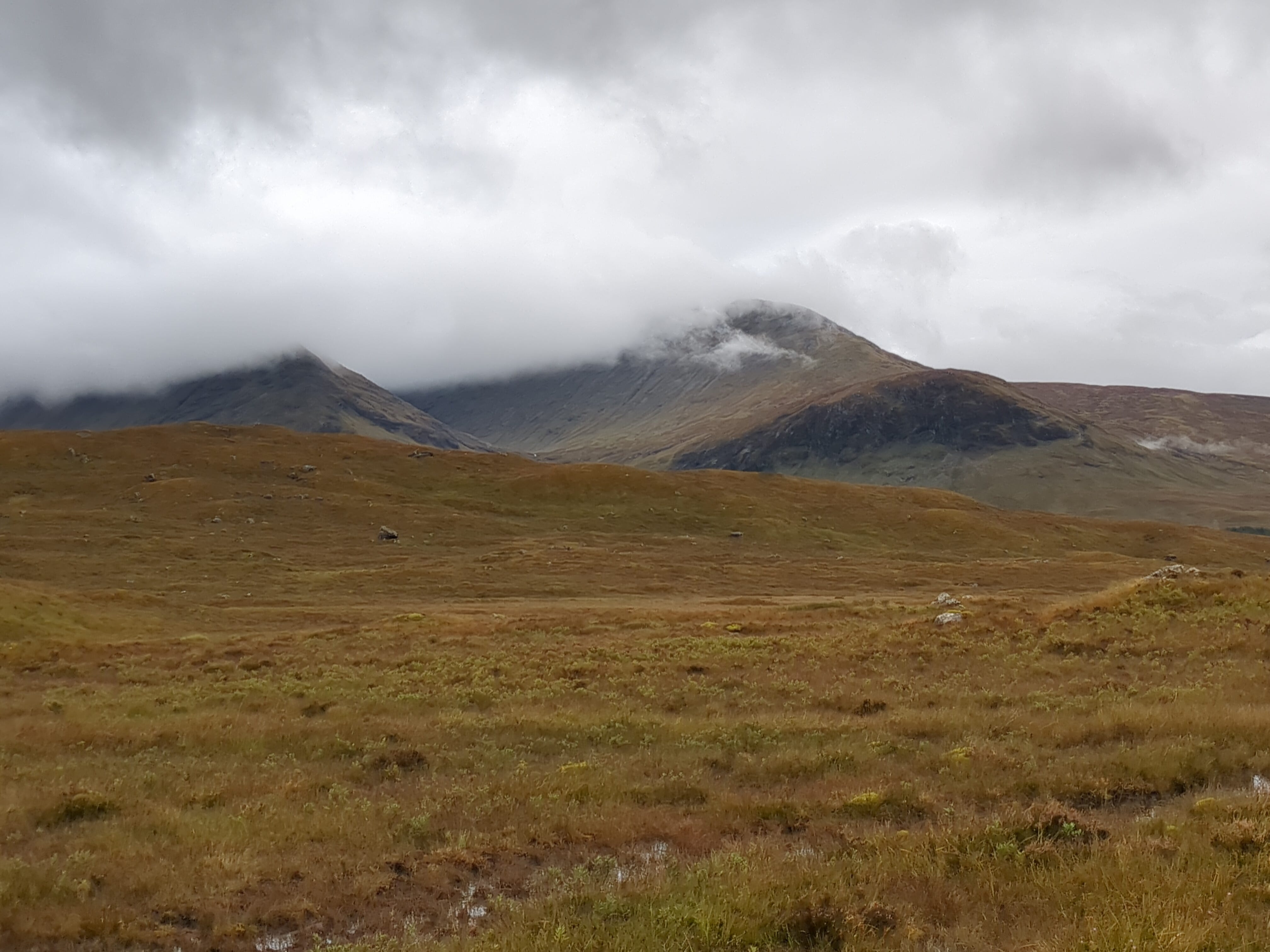
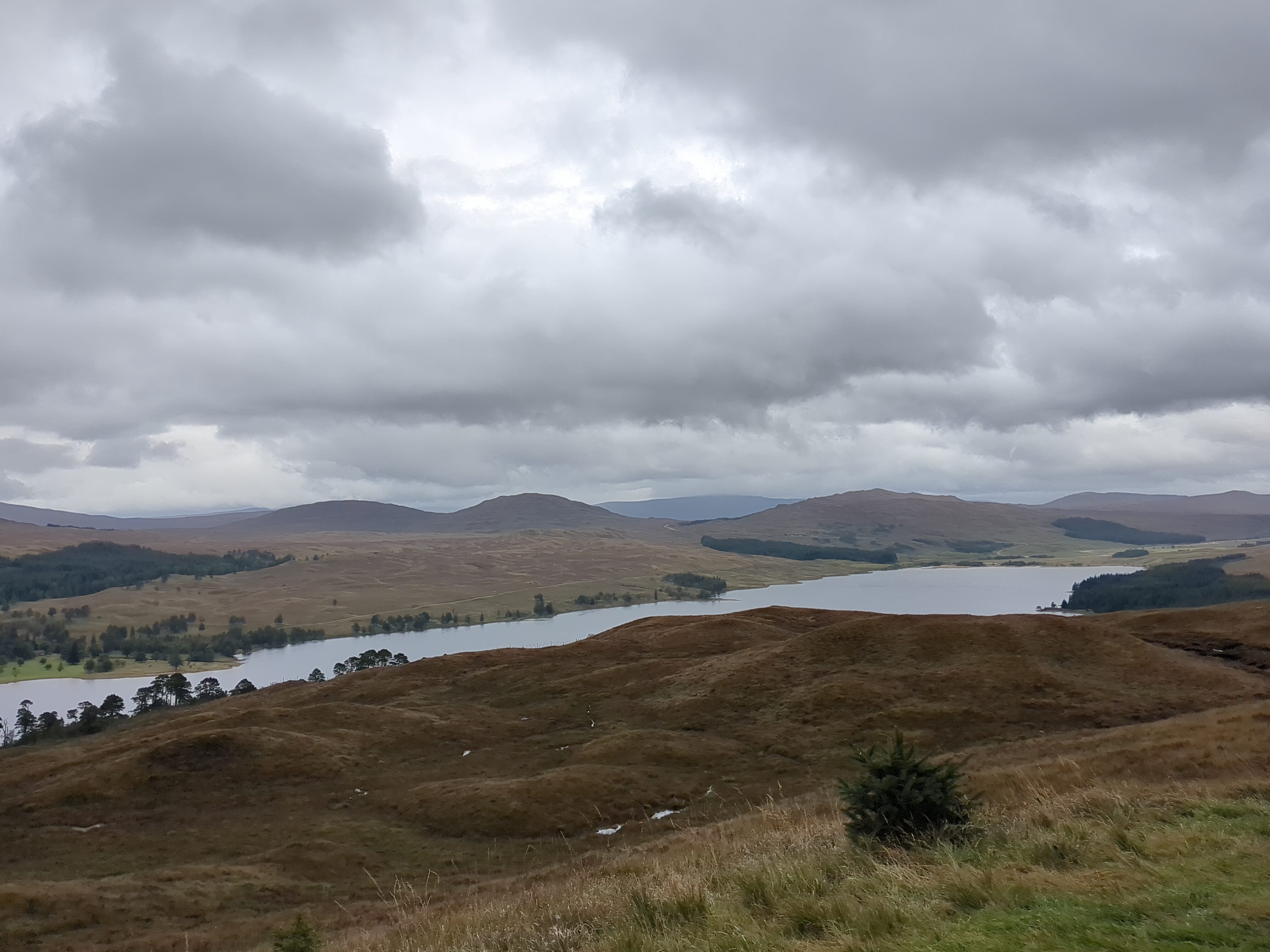
Never could there be more wonderful solitude. No rain fell. Fog slunk down off the mountains to the west. The slopes were incredible variations and contrasts, serried green cut by craggy gray. One high lip between slopes seemed ready to spill a whole high hidden valley’s secrets down onto the moor. Uninhabited, I said? Twice I stepped off the rough-cobbled drover’s road to let a pick-up truck hauling timber pass. The driver wore a tweed cap and vest and a collared shirt — no cowpoke.
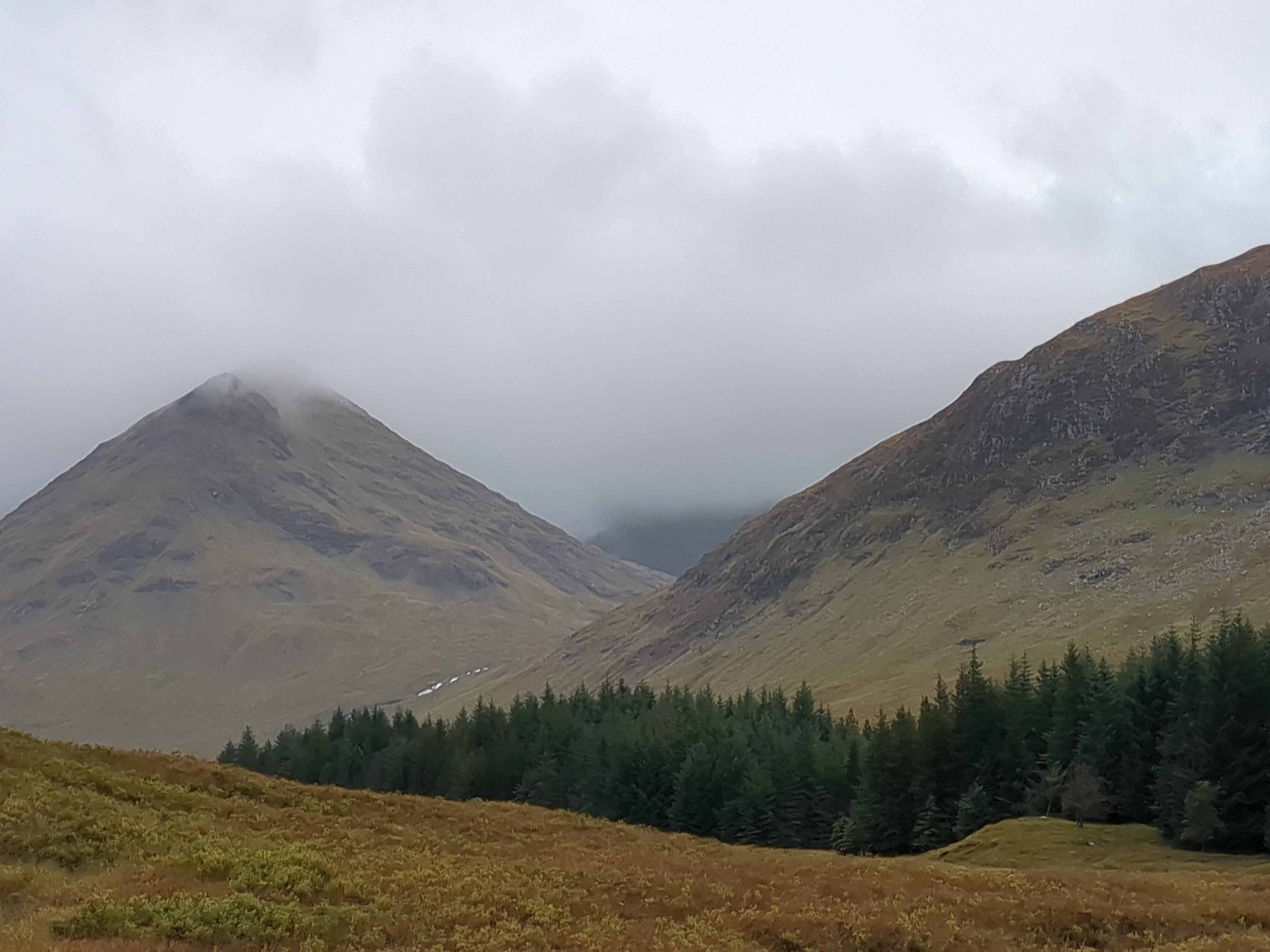
The walking was truly joyous. One foot goes in front of the other as if it was the most natural thing in the world. And indeed isn’t it? Why couldn’t I just keep walking from here until the end of time? Every day I ate enough, every night I slept enough, and whatever else came was gratis. What else was there?
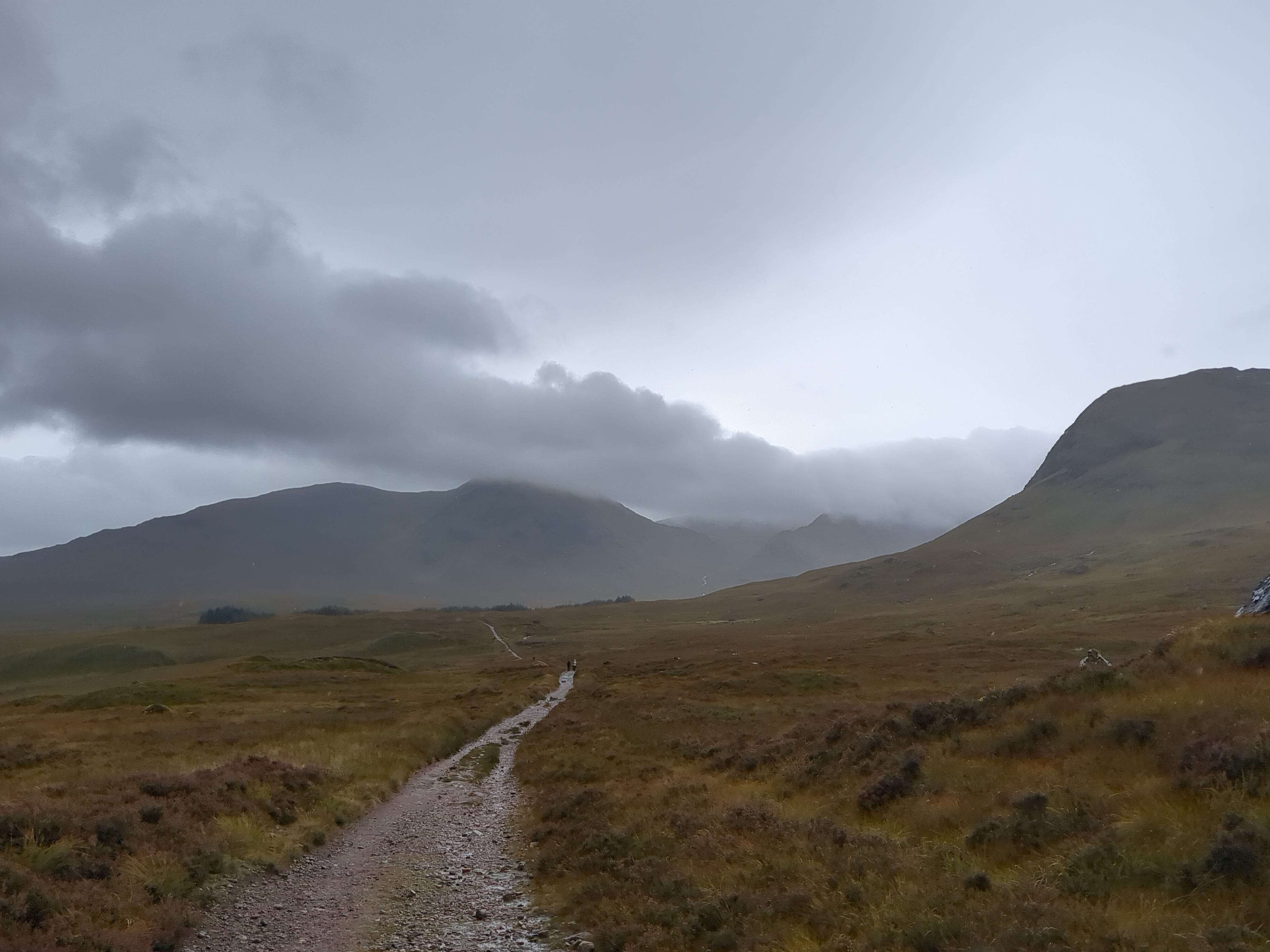
The rain started as I ascended the ridge after Ba Bridge. As I crested and began to drop down into Glen Coe, it began to hit hard and cold. Buachaille Etive Mor stood on my left like an iceberg in the mist as I limped, wet and chilled, down to Kingshouse. I asked at the pub and they said I could pitch beside the stream or back in the trees. I chose the latter. The damp had gotten into my bones and I spent the rest of the day, well into the evening, warming myself with fire and drink in the hotel pub. It was quite the convergence: the Dutch blonde and German redhead each occupied their own leather loveseat by the fire, and the Yorkshire teacher I’d met was there, too, chatting idly with a Korean backpacker. Everyone seemed happy to acknowledge the other with merely a nod and a smile — the weather had taken conversation out of us.
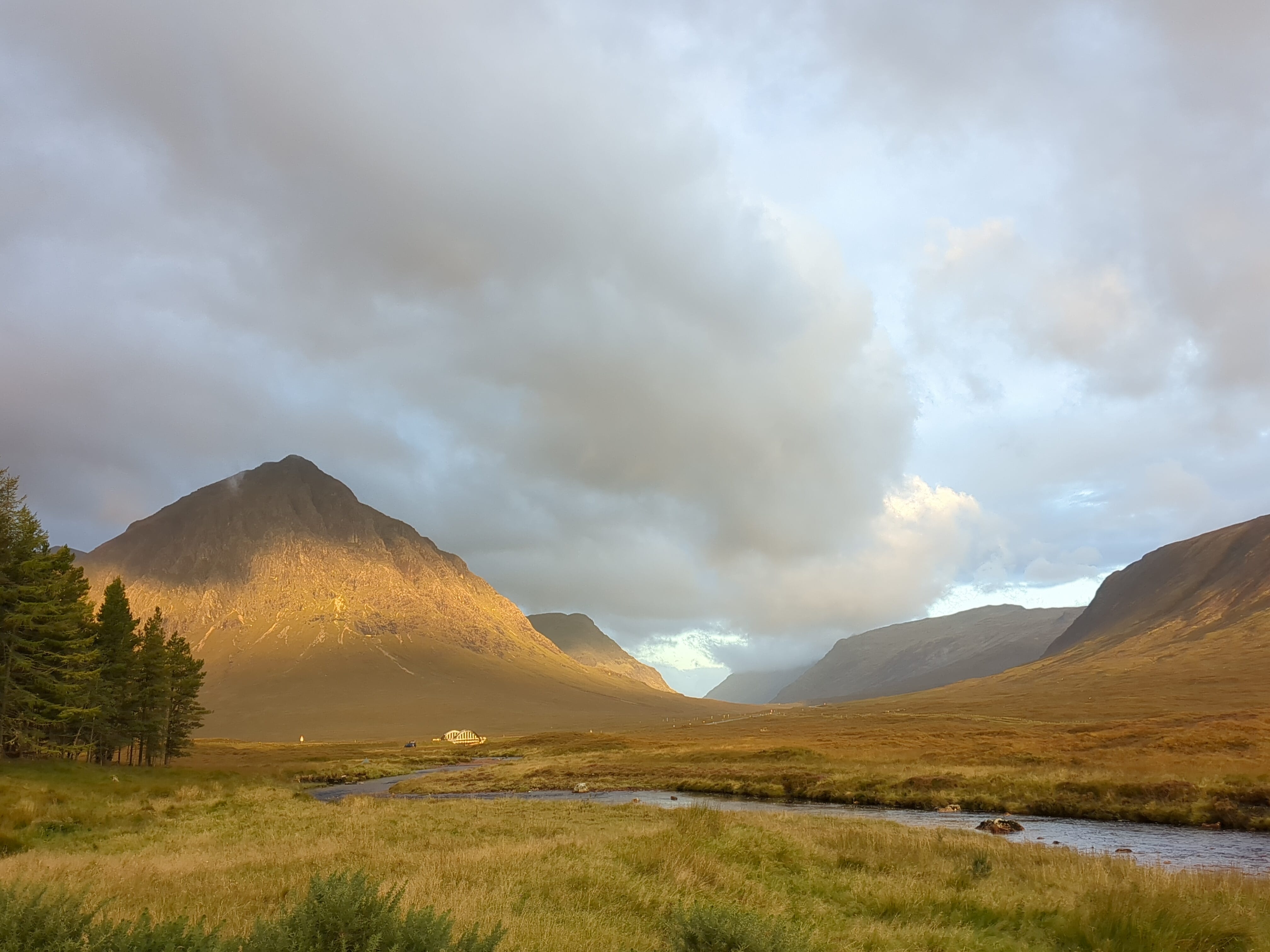
Worn down to nothing, I had begun to think clearly again: and the thought was: it is dangerous to view the world as you want it to be. You begin to make compromises with yourself when you attempt to analyze and discern. One quickly finds one’s self on shifting ground, and so one must shift, too, lest he be swept away. Where, then, is the self in all this? And where is the world you wanted? Maybe it came, but only in part, or not in the way or shape you expected, or maybe it wasn’t what you wanted at all. Maybe it was what someone else wanted.
What, then? Was this what had plagued me? had sent me over the edge to the point of sickness? Piles upon piles of civilizational artifice accreting in my person until I was fighting implanted desire with implanted desire, without regard to what actually was right or good?
Perhaps so. Perhaps the world I want is not at all relevant, because I cannot know if it is actually my desire or someone else’s. But even more importantly: it is not what is right here. Here, in the space between myself and all I come in contact with, sparks fly as our wires touch — is that the only thing I can really know, because those sparks mean an exchange of charge and thus something real, something baked into the structure of reality?
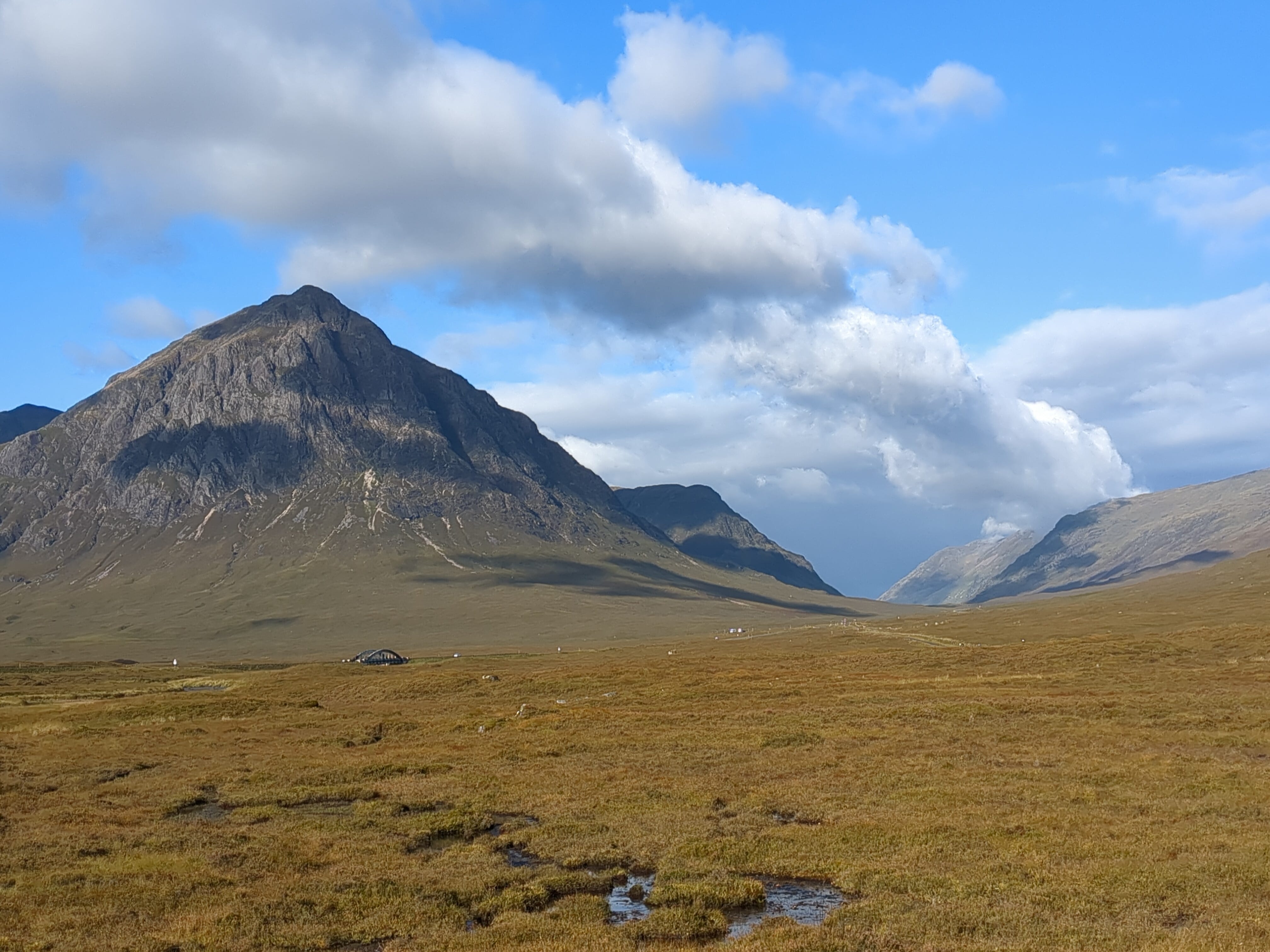
I awoke to surprise sunlight. Buachaille Etive Mor glowed in the cloud-cladded sunrise. A rainbow touched down nearby. Though I was the first one up in the pine stands crowded with tents, I was the last to leave — too much time marveling. My bic lighter failed me as I tried to make coffee. An Asian chick breaking down her tent nearby came and lit the stove for me. I thanked her and she and her European friend with the long wavy tresses waved goodbye.
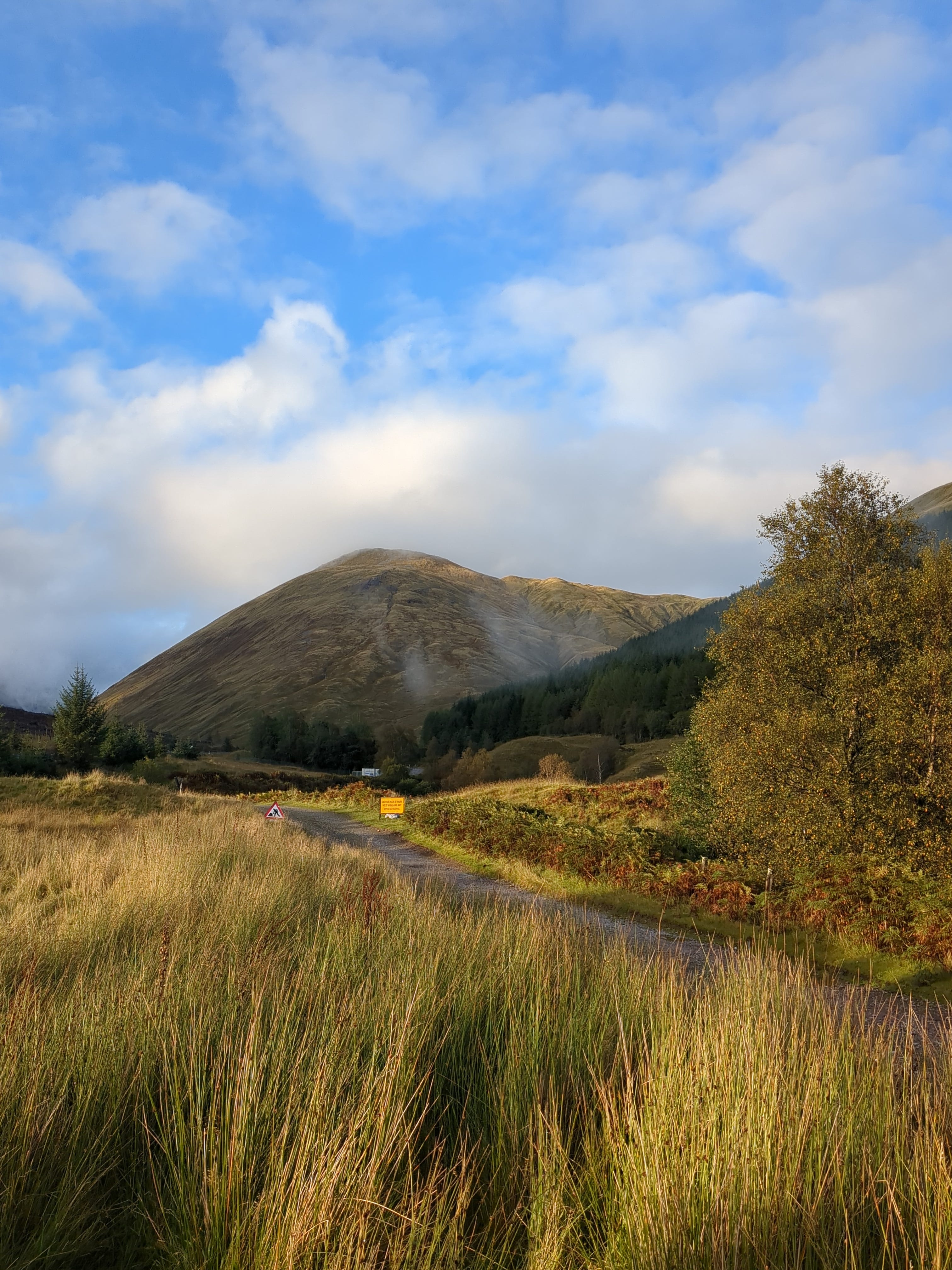
The walk up Glen Coe was slow. My inner left thigh was pretty tender and I didn’t want to pull anything. But all the better to marvel at the mountains green and gold under the sun, then menacingly black and gray when the clouds rolled in. Blue skies returned quickly; the side of the Mor was shining as sunlight speckled the water running down the rocks. The Devil’s Staircase is set of switchbacks much warned of by certain people on the Way. In truth, it was no harder than anything at home and not even challenging in my condition. I stopped plenty of times for pictures, this southern aspect windy but warm. At the top, I drank water and enjoyed the mottled mountainsides under the clouds.
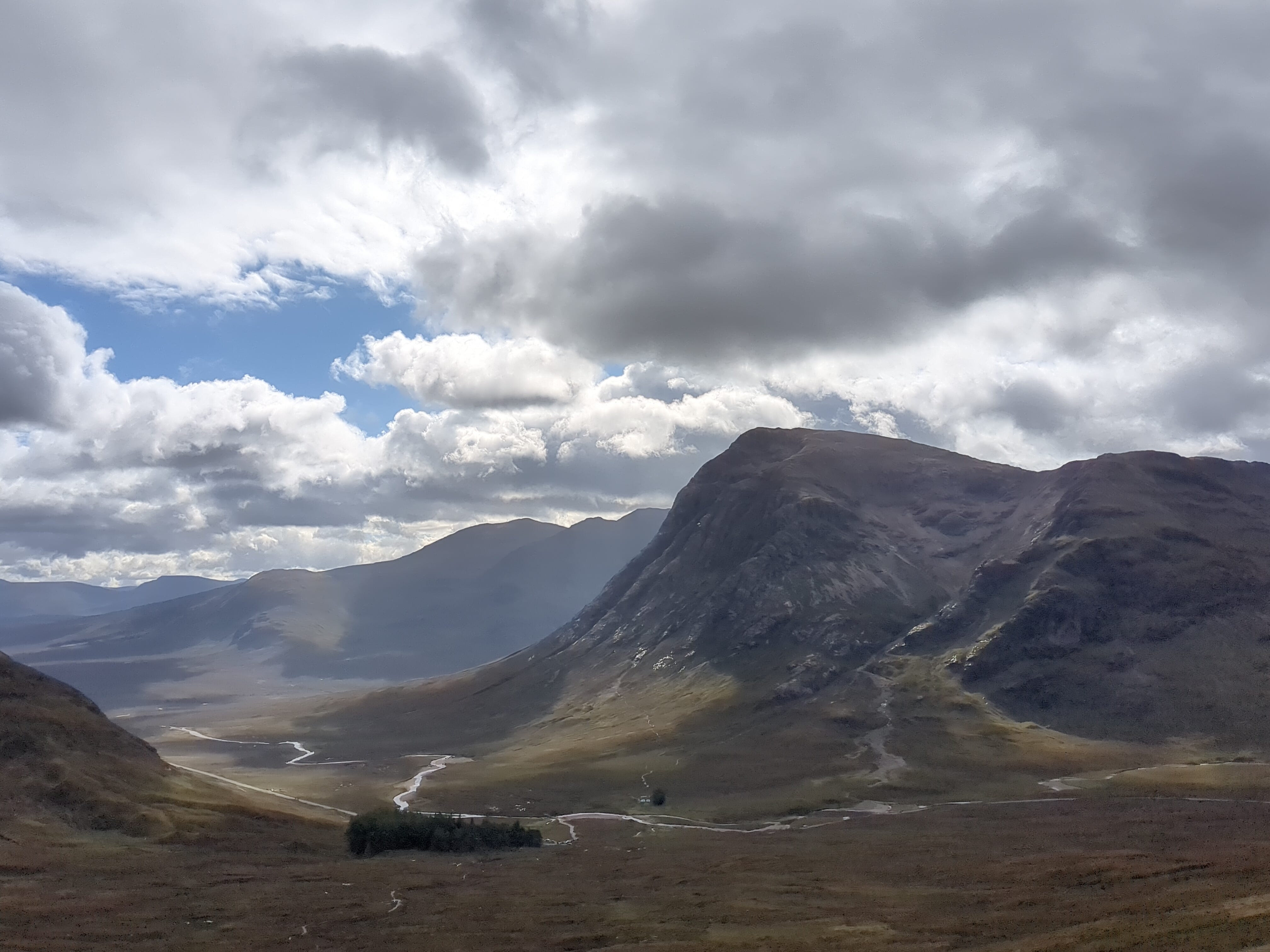
Oh, here comes the rain. Best go.
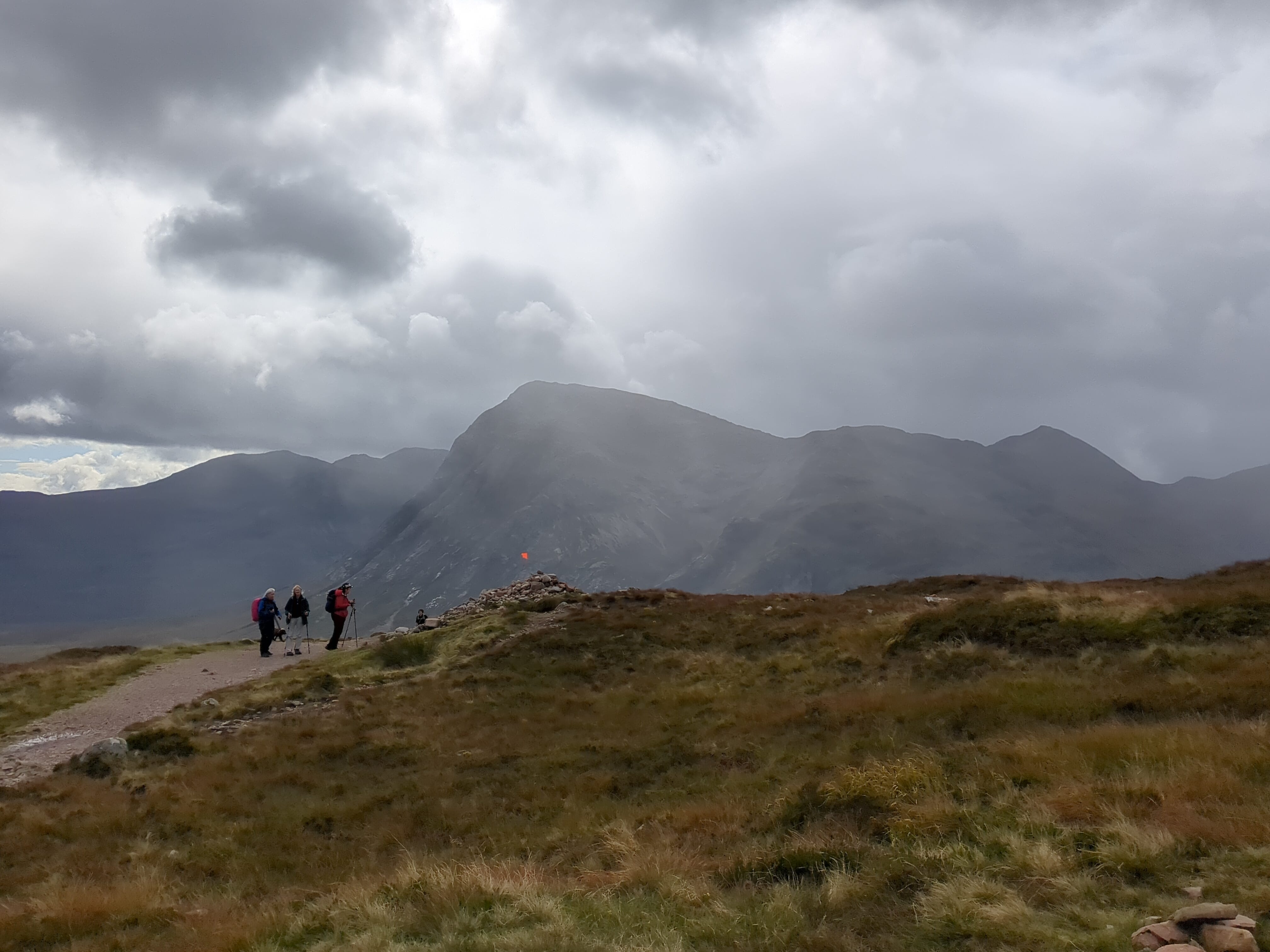
When I turned, never have I seen a finer sight than the mountains to the north.
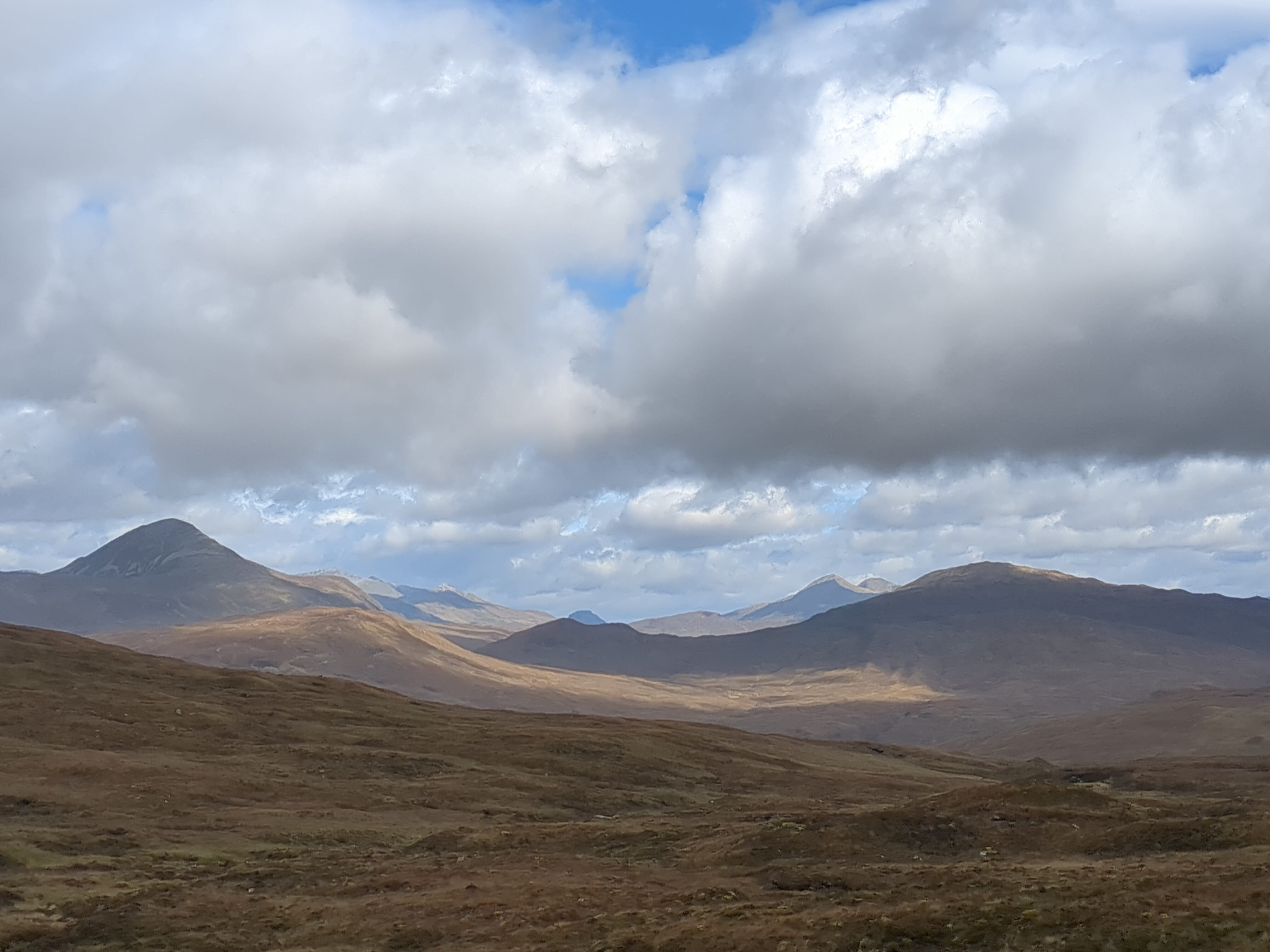
I moved fast on the descending track, making up for lost time and staying ahead of the cold air now whipping down from the peaks. Rain pelted me from behind at times, but the walking had never been easier. The undulating, pebbly trail led down into the glen and then onto tarmac that ran straight into Kinlochleven. There I would wild camp on the far side of town. Or so I’d planned.
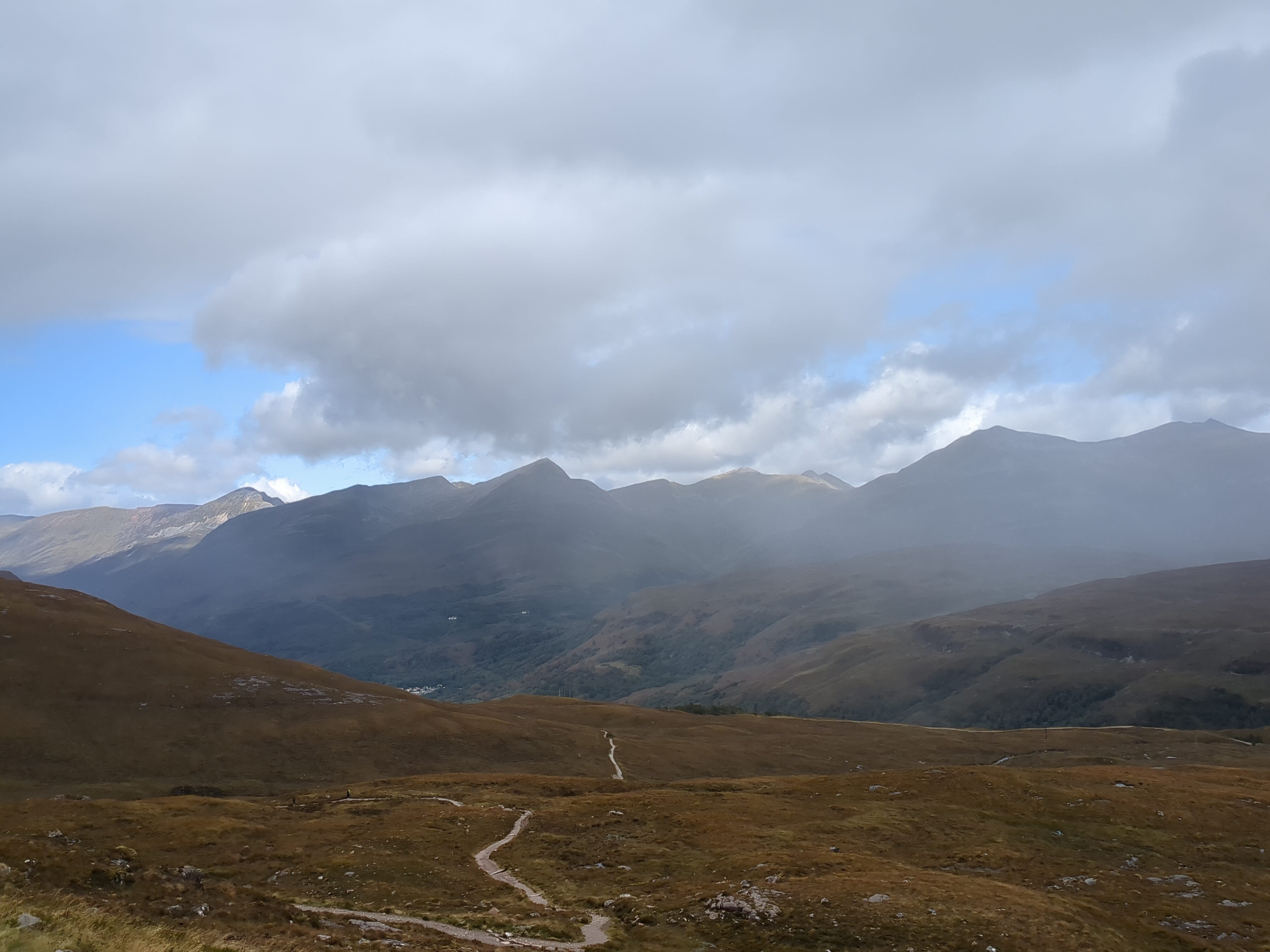
Once again, the lure of the pub proved irresistible. I stopped in the last possible place for a pint and a pie. Ease said, just pitch here, they’ll let you. But intuition was behind it, nudging my sloth ahead so it didn’t have to speak itself. I paid a few pounds to pitch over beside the hotel’s cabins, just for sheer ease. I’ll rough it again when I’m back in Pisgah or Nantahala, I said. Unpacking my tent, I found that the ferrule joining the center pole has come unglued and pushed back down inside the pole. Try as I might, it wouldn’t poke loose. Of all the days! With just one night left! Annoyed as much as relieved, I went prowling for a solution. In a musty camp kitchen, I found abandoned tent stakes. Peeling off duct tape wrapped around my water bottle, I bundled the thin steel stakes around the center pole in a makeshift splint. Well, I really would have to make it to Fort William tomorrow, wouldn’t I?
Who should be lounging on the porch of one of the cabins, but the Asian chick and her friend with the wavy tresses. She asked if I was camping down there, I said yes and explained my difficulties. In an an accent not quite French, “Oh, well, you are welcome to stay with us, even though it is not our cabin.” Huh? She explained: they’d met a nice Dutch guy who’d accidentally rented a whole cabin, not just a bunk. They were going to camp out but he offered to let them stay with him. He wasn’t here yet, but they were sure he wouldn’t mind me taking up the fourth bunk. Once again, the strange companions and generosities of this trail. I’m fine, but thank you very much, I said. I ate my last freeze-dried meal and poured the last of the Glengoyne into my camp mug. On the other side of the fence was the town football pitch. I drained the whisky and watched the local boys play five-a-side under the spotlights, while the up-glen breeze whipped a huge Palestinian flag from a rabid SNP supporter living on the other side of the field.
I was awakened in the dark by a familiar voice hovering over my tent. “My friend, are you awake?” It was the Asian chick, whom I’d found out was from Belgium.
“I am now.”
“He is here and he says you can stay with us, it’s no problem.”
“Thank you so much, but I’m fine.”
“Oh, but it will be so cold tonight, are you sure, are you going to be all right?”
“Yes, ma’am, I really appreciate it, though.”
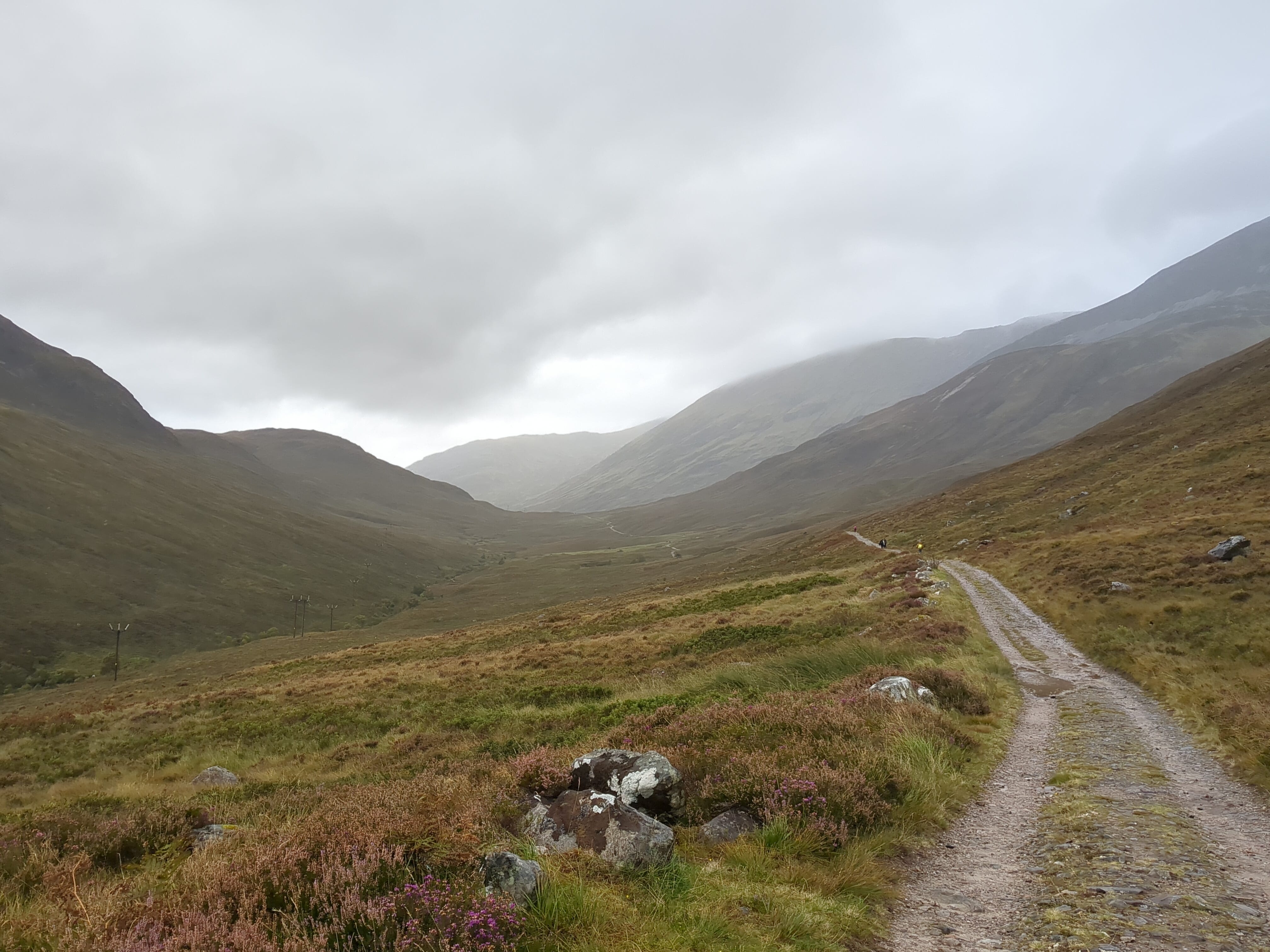
Again, up early, though not by plan. I got going anyway. The climb out of Kinlochleven was stiff and rocky. But once up high, it was fine sailing down the glen. Sailing indeed — the wind from behind filled my jacket and pack cover like a topgallant, speeding me down the track toward Larigmor, “the great pass.”
Rain rolled like waves of static on an antenna TV. Clouds cladded the peaks again. One foot in front of the other, it was the easiest, most joyous walking I’ve ever done. The glen was gloriously weathered, raw, isolated. Even sheep were absent. The slopes were mottled with red-purple heather, green turf, and blue-gray streaks of rock.
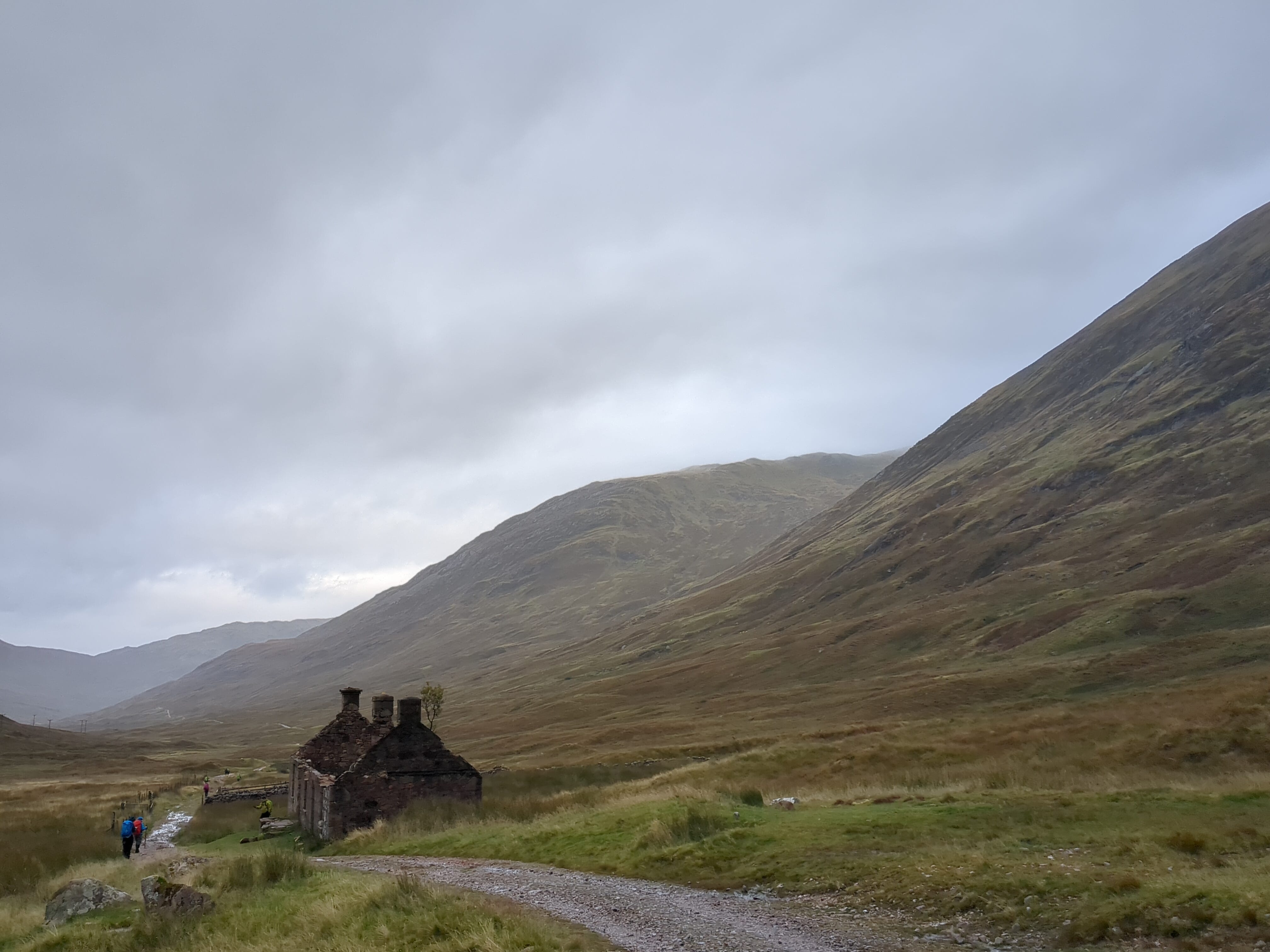
Crossing the pass, better weather soon followed. I passed a cairn commemorating the Campbells’ retreat from the Battle of Inverlochy — supporters of the MacDonalds and Montrose (and the Crown) were to add a stone, while supporters of the Campbells and Argyll (and the Covenanters) were to take one. I knew my family history and took away two, just for good measure.
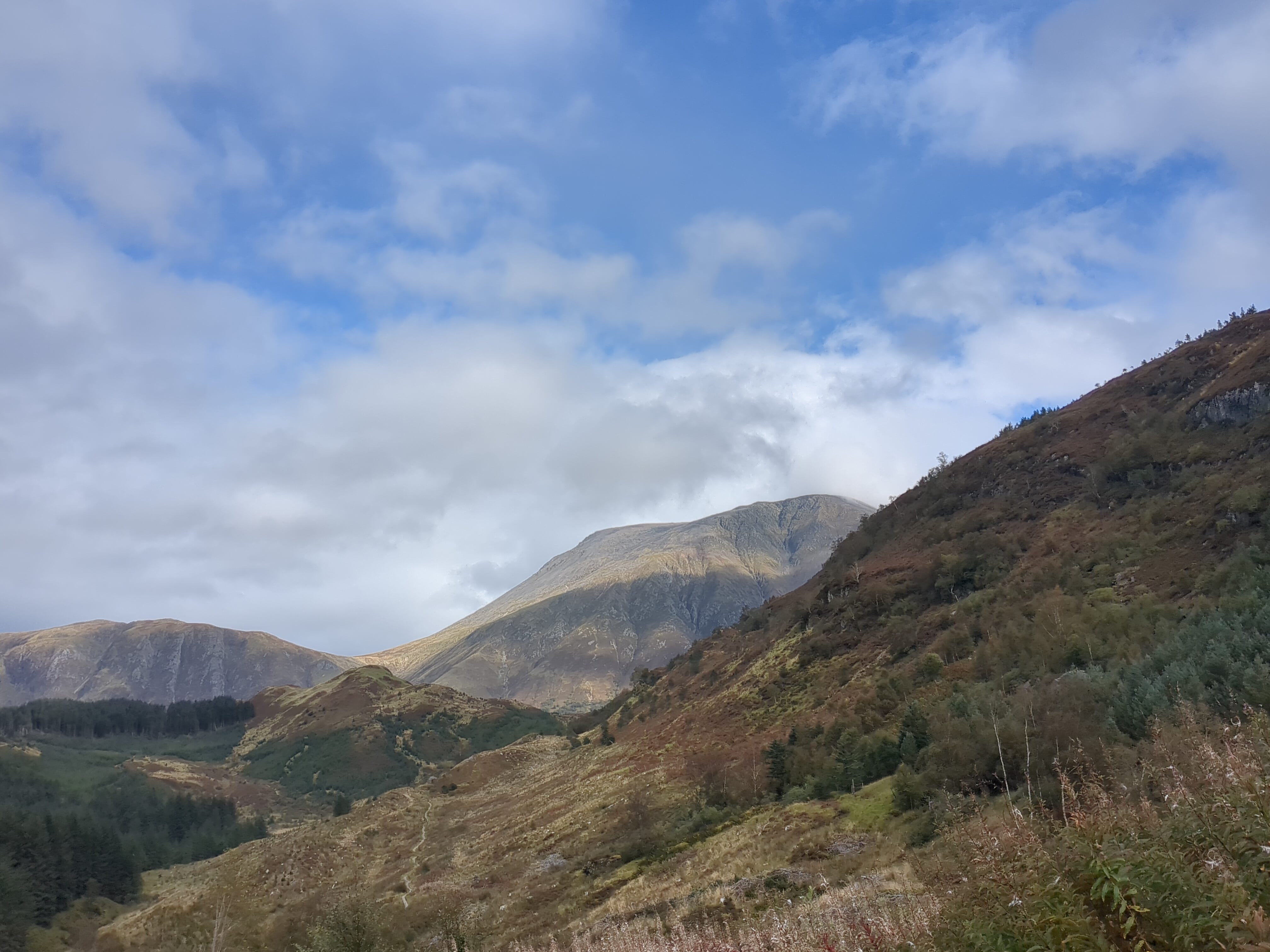
The final miles to Fort William became progressively anticlimactic. Ben Nevis was socked in with fog (not unusual, I heard) and the Way changed to logging road and then tarmac all the way into the center of town. I was not happy to reach the end, although the touristic trappings of Fort Bill had little to do with it. I realized, crossing the finish line, that I would not sleep on the ground that night, nor walk in the morning.
Well, why shouldn’t I keep walking? I had everything I needed on my back, and then some. And if even some of that I felt was excess and could give away, why then did I need a single thing shelved and closeted in my house? Just give it all up and go.
Perhaps that was what was due myself, to return to Neil Gunn’s comment. But was that ever a debt fully paid? Or was it, more likely, that even a perceptive man would never know when the debt was satisfied and now accustomed to indulging himself, he would continue on and on paying himself back, to detriment of all others in his life? This, most likely. A man is Man, after all, there’s nothing he can get away with in the end.
Better, then, for this power, this ability to walk and be content, to remain as a loaded gun. A round chambered, hammer back, riding just back of the hip bone, ready for the smooth draw when the time demands. There’s the old canard about hoping you never have to use it, but that’s false, any man who packs a power of any kind has imagined using it and using it right and using it well and being satisfied with that. It’s a hope in being competent one day, when such an act is a boon and not a cost. So then would I leave the walking on my hip, ready for catastrophe, ready for the day when everything in life goes straight to hell and there’s nothing left to hold on to so I might as well just walk. May it never happen. But at least I know what’ll set me straight and where to keep it.
Now look-ee there, that just about fixed me up.
That final night, it seemed all the walkers converged on the Ben Nevis pub. The mighty blonde and the German redhead, the Dutch guy who’d lent the cabin to the Belgian gals, the Yorkshire schoolteacher and the Korean backpacker, the Kansan walking the trail with his Outlander-obsessed mother, plus many others who’d dipped in and out of view the past week or so. We downed pint after pint and shared stories of our walk and other travels. A local lad and his mate struck up a conversation. He was an MMA promoter and was only in town to see family. He couldn’t understand why people came here to walk. “It’s a bit shit, innit? Ah’ve never even climbed Ben Nevis. Right there, mah whole life! Never once.” He showed me pictures of his trip to Las Vegas for a fight; he loved Vegas, wanted to move there as soon as possible. He had to, it was his future — he was so certain he’d make it soon — he had to make it, he was really on the cusp — did I think he could make it? what was my advice? I just asked more questions in return until the topic changed. He was white-knuckling this madness of momentum, wasn’t he? Maybe he had to go over to my side of the pond find what was due himself. Look how far I’d come to do the same, who was I to judge? I only hoped he could find solace as I did, arising at first light to just plod ahead to the repetition of the right words:
Cause me to hear thy lovingkindness in the morning; for in thee do I trust: cause me to know the way wherein I should walk; for I lift up my soul to thee.
- Psalm 143:8